Treated by Dr. Venkat Ram Thyalapalli at Dr Venkatram Thyalapalli
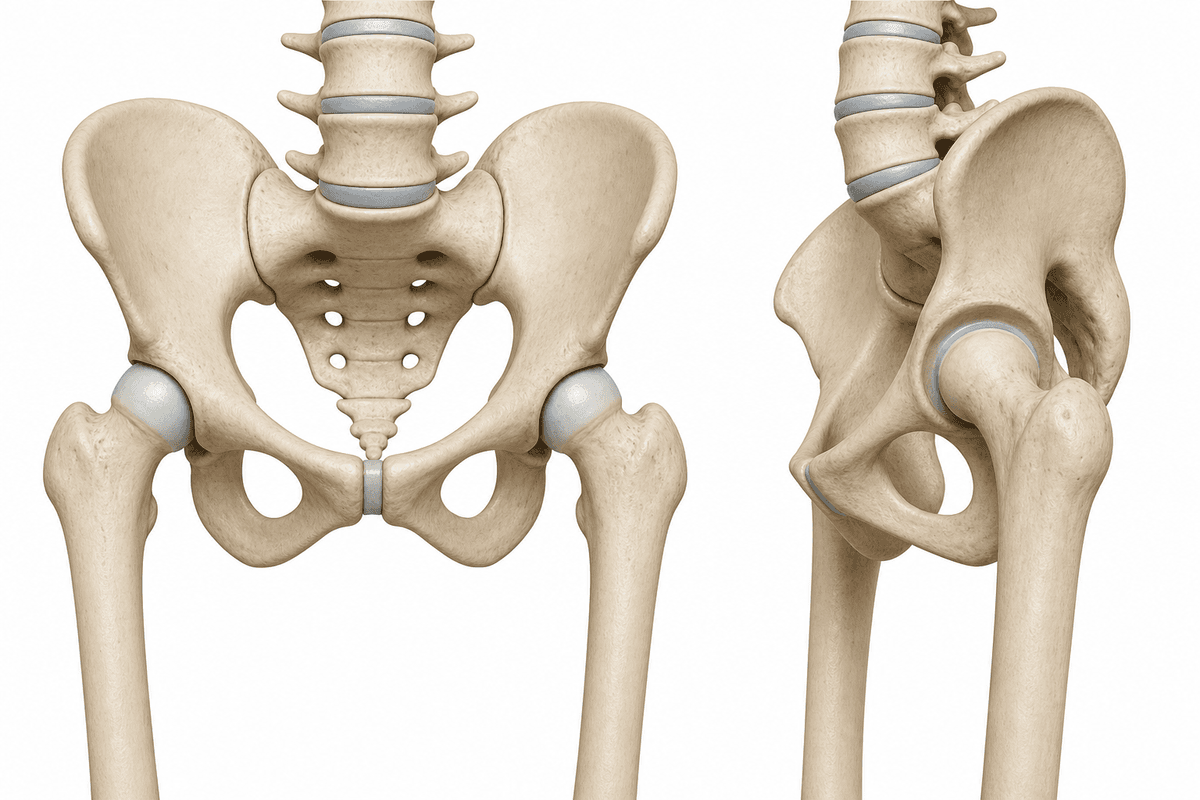
Developmental Displacement of the Hip (DDH) is a condition affecting infants and young children in Hyderabad where the hip joint is improperly formed or dislocated. The femoral head may be partially or completely displaced from the acetabulum, ranging from mild instability to complete dislocation. Early detection and treatment are crucial for normal hip development. Dr Venkatram Thyalapalli specializes in comprehensive DDH management using evidence-based pediatric orthopedic approaches.
The hip socket (acetabulum) is shallow but the femoral head remains in contact with the socket. This is the mildest form where the hip joint is unstable but not dislocated, requiring monitoring and possible conservative treatment.
The femoral head is partially displaced from the acetabulum but maintains some contact with the socket. This intermediate form shows instability with the hip moving in and out of the socket, requiring prompt intervention to prevent progression.
The femoral head is completely displaced from the acetabulum with no contact between the ball and socket. This is the most severe form requiring immediate treatment to relocate the hip and promote normal joint development.
Multiple factors can contribute to the development and progression of this condition.
Developmental Displacement of the Hip develops gradually. Recognising symptoms early gives you more treatment options.
From conservative to surgical — we always start with the least invasive option first.
A structured, patient-first approach from first visit to full recovery.
Dr Venkatram Thyalapalli performs detailed physical examination including Barlow and Ortolani tests, assesses hip stability, range of motion, leg length symmetry, and skin fold patterns. Risk factors and family history are carefully evaluated to determine the severity and appropriate diagnostic pathway.
Age-appropriate imaging is utilized with ultrasound for infants under 6 months using Graf or Harcke techniques, and radiographs for older children to assess hip position, acetabular development, and femoral head coverage. Serial imaging monitors treatment response and guides decision-making throughout the care continuum.
Based on the child's age, severity of displacement, and response to initial interventions, Dr Thyalapalli develops a personalized treatment strategy. This ranges from conservative harness treatment for young infants to surgical reconstruction for complex cases, always prioritizing the least invasive effective approach with family involvement in decision-making.
Regular follow-up appointments track hip development through childhood with periodic imaging to ensure maintained reduction and normal acetabular growth. Any residual dysplasia or complications are identified early and addressed proactively. Dr Thyalapalli provides ongoing guidance on developmental milestones, activity modifications, and long-term prognosis to optimize outcomes.
What to expect at each phase of recovery.
During harness wear or spica casting, parents receive detailed instructions on skin care, positioning, and handling. Regular clinic visits ensure proper device fit and hip positioning. Infants adapt quickly to the harness, while those in spica casts require modifications for feeding, diapering, and transportation during the 3-4 month immobilization period.
After harness weaning or cast removal, gentle range of motion exercises begin under physiotherapy guidance. Hip muscles are gradually strengthened and normal movement patterns are encouraged. For surgical cases, protected weight-bearing progresses based on healing, typically over 6-12 weeks, with emphasis on achieving age-appropriate motor milestones.
Long-term surveillance continues through childhood with periodic clinical and radiographic assessments. Hip development is monitored for residual dysplasia, leg length discrepancies, or early arthritis signs. Most children achieve normal function and participate fully in activities, with final assessment typically performed after skeletal maturity to confirm optimal hip joint health.
When treated early with appropriate methods, over 90% of children achieve anatomically normal or near-normal hip joints with excellent acetabular coverage and femoral head concentricity. They experience pain-free function and can participate in all age-appropriate physical activities without limitations.
Successful treatment prevents residual hip dysplasia that would otherwise lead to premature osteoarthritis in adulthood. Early intervention during the critical developmental window allows the acetabulum to remodel and deepen around the properly positioned femoral head, establishing stable biomechanics for lifelong hip health.
Treatment corrects leg length discrepancies, restores symmetrical hip range of motion, and enables normal gait patterns. Children achieve developmental milestones on schedule, walk without limping, and demonstrate equal strength and flexibility in both hips, supporting active lifestyles throughout childhood and adolescence.
Appropriate early intervention dramatically reduces the likelihood of requiring complex reconstructive procedures later in childhood or total hip replacement in young adulthood. This preserves the native hip joint and avoids the complications and limitations associated with major surgical interventions and prosthetic implants.
Untreated DDH leads to progressive hip dysplasia with abnormal joint mechanics, causing chronic pain, limited mobility, and early-onset osteoarthritis by the second or third decade of life. Children develop significant limping, leg length discrepancy, and muscle weakness affecting quality of life. Eventually, severe arthritis necessitates total hip replacement at a young age, with reduced implant longevity and multiple revision surgeries expected over a lifetime, creating substantial functional limitations and ongoing medical challenges.
Parents should seek immediate evaluation if they notice any asymmetry in their infant's hip creases, limited hip abduction during diaper changes, clicking sounds with hip movement, or family history of DDH. All newborns with breech presentation or risk factors require screening examination. If a toddler demonstrates limping, toe-walking, or waddling gait after beginning to walk, prompt pediatric orthopedic consultation with Dr Venkatram Thyalapalli is essential for timely diagnosis and intervention to prevent permanent hip damage.
Early treatment means more options and better outcomes. Book a consultation to understand your condition and explore the right path forward.
Consult Venkat Ram Thyalapalli for Developmental Displacement of the Hip at any of these 2 centres — pick the one nearest you.