Treated by Dr. Venkat Ram Thyalapalli at Dr Venkatram Thyalapalli
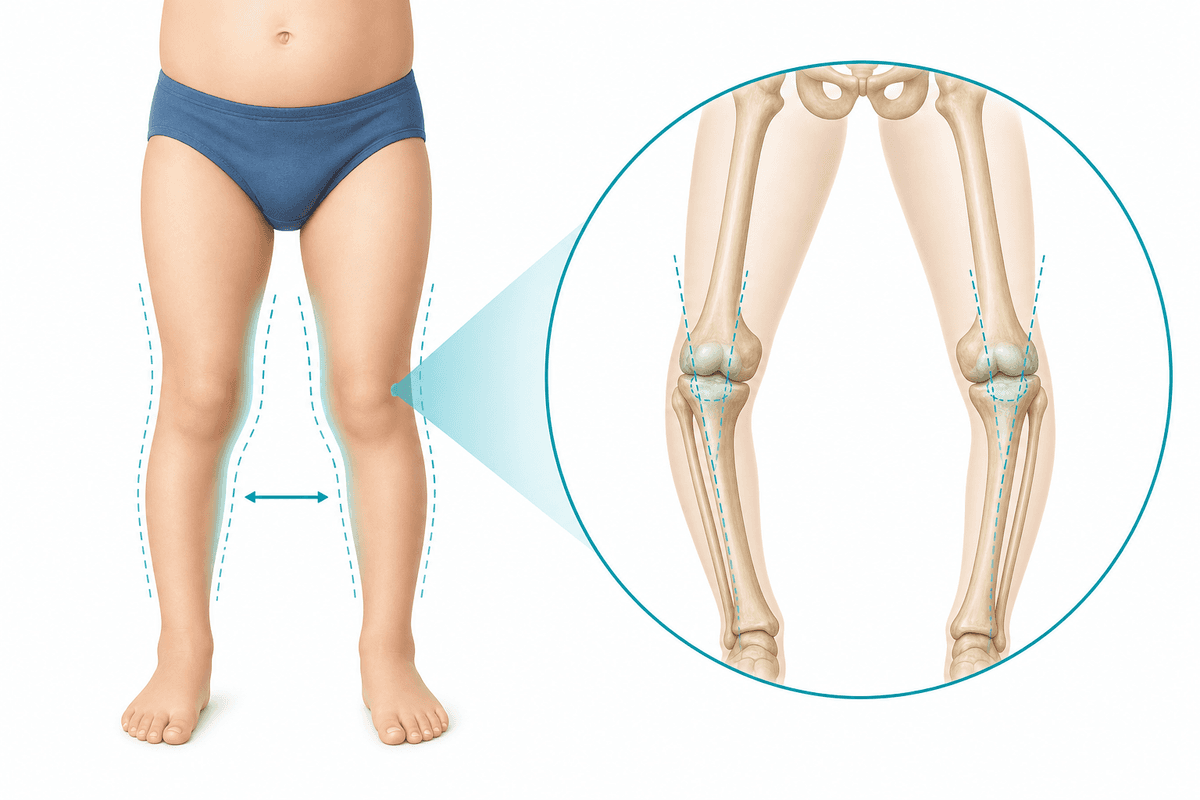
Bow legs, also known as genu varum, is a common condition in Hyderabad where a child's legs curve outward at the knees while the ankles remain together. This condition is often normal in infants and toddlers, typically resolving by age 2-3 years, but persistent cases may require medical evaluation to rule out underlying disorders like rickets or Blount's disease. Dr Venkatram Thyalapalli provides comprehensive assessment and treatment for children with bow legs at his pediatric orthopedic clinic.
Normal developmental bowing seen in infants and toddlers up to age 2-3 years that spontaneously corrects without intervention as the child grows and begins walking.
Pathological condition affecting the growth plate of the upper tibia, causing progressive bowing that worsens over time and requires treatment to prevent permanent deformity.
Bow legs caused by nutritional deficiencies, particularly vitamin D deficiency, leading to softening of bones and weight-bearing deformities that need medical management.
Multiple factors can contribute to the development and progression of this condition.
Bow Legs develops gradually. Recognising symptoms early gives you more treatment options.
From conservative to surgical — we always start with the least invasive option first.
A structured, patient-first approach from first visit to full recovery.
Dr Venkatram Thyalapalli conducts thorough physical examination measuring intercondylar distance, evaluating gait patterns, assessing symmetry, and reviewing developmental history to distinguish physiologic from pathologic bowing.
When indicated, Dr Thyalapalli orders standing lower limb X-rays to measure mechanical axis deviation and assess growth plates, along with blood tests for vitamin D and calcium levels to identify nutritional causes.
Based on the child's age, severity of bowing, underlying cause, and functional impact, Dr Thyalapalli develops an individualized treatment plan ranging from observation to surgical intervention, with clear explanation to parents.
Dr Thyalapalli provides continuous monitoring throughout the child's growth with scheduled visits to track correction progress, modify treatment as needed, and ensure optimal alignment is achieved and maintained.
What to expect at each phase of recovery.
For surgical cases, initial 2-3 weeks focus on wound healing, pain management, and protected weight-bearing. Non-surgical treatments begin with education and adaptation to bracing or supplementation protocols.
Over 6-12 weeks post-surgery, gradual increase in weight-bearing and mobility occurs with physiotherapy to restore strength and function. Brace users undergo regular adjustments and compliance monitoring during this critical correction period.
Extended follow-up over months to years ensures maintained correction during remaining skeletal growth, with periodic X-rays and clinical assessments to detect any recurrence and optimize final alignment outcomes.
Over 95% of children with physiologic bow legs experience complete spontaneous correction by age 3 years without any intervention, achieving normal leg alignment and function.
Rickets-related bow legs show significant improvement within 3-6 months of appropriate vitamin D and calcium supplementation, with continued straightening as bones remineralize and strengthen.
Corrective osteotomy achieves precise mechanical axis restoration in pathologic cases, with bone healing typically complete in 8-12 weeks and excellent long-term functional outcomes when performed timely.
Appropriate treatment prevents future problems including premature arthritis, chronic knee pain, abnormal gait patterns, and psychosocial concerns related to appearance, ensuring normal childhood activities.
Untreated pathologic bow legs, particularly Blount's disease, progressively worsen leading to severe deformity, abnormal joint stress, and early-onset arthritis in the knees and ankles. The increasing mechanical axis deviation causes pain, functional limitation, and difficulty with daily activities. Delayed treatment makes surgical correction more complex with less predictable outcomes, and permanent growth disturbances may result in leg length discrepancy and lifelong disability.
Parents should consult Dr Venkatram Thyalapalli if bow legs persist beyond age 2-3 years, worsen over time, appear asymmetric with one leg more affected, or cause pain or limping. Immediate evaluation is warranted if the child has risk factors including obesity, family history of Blount's disease, or signs of rickets such as delayed development, bone pain, or muscle weakness. Early assessment allows timely intervention before deformities become severe and less responsive to conservative treatment.
Early treatment means more options and better outcomes. Book a consultation to understand your condition and explore the right path forward.
Consult Venkat Ram Thyalapalli for Bow Legs at any of these 2 centres — pick the one nearest you.