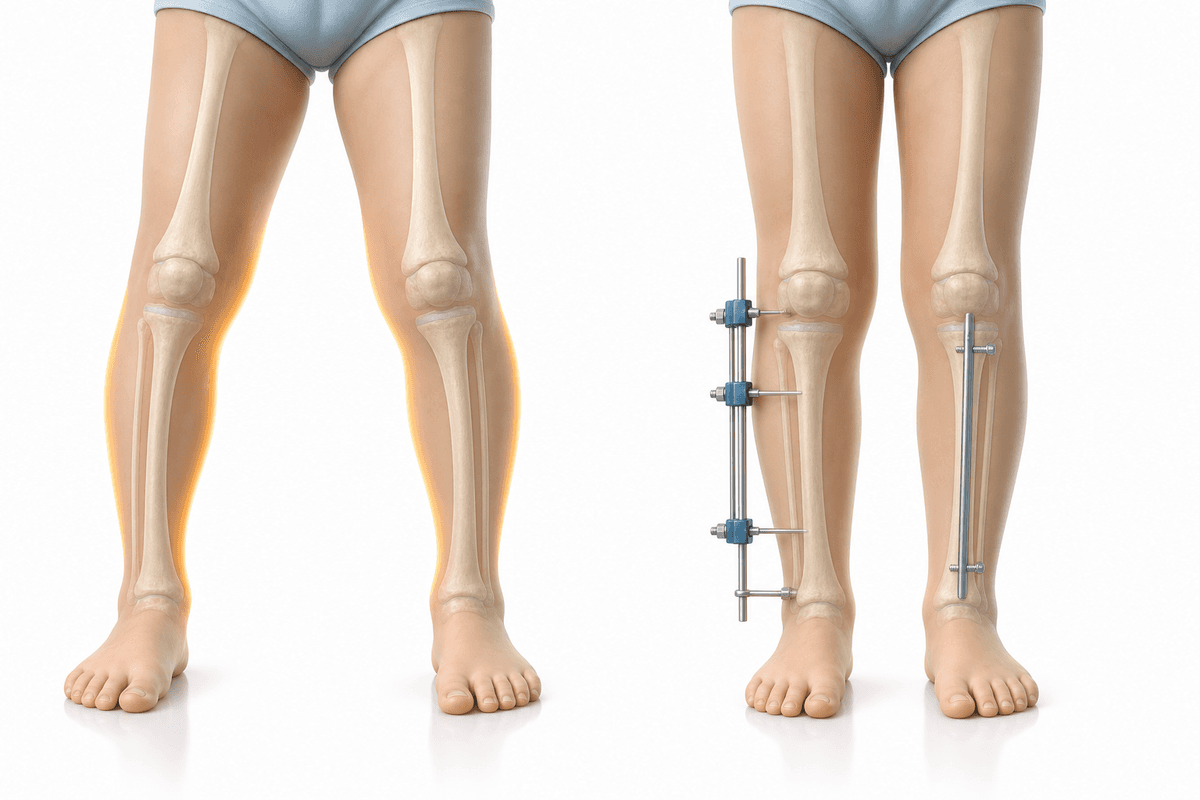
Performed by Dr. Venkat Ram Thyalapalli at Dr Venkatram Thyalapalli
Limb Deformity Correction in Hyderabad addresses angular deformities, rotational issues, and limb length discrepancies in children through surgical and non-surgical techniques. Dr Venkatram Thyalapalli specializes in advanced correction methods including guided growth, osteotomies, and external fixation devices tailored to each child's specific deformity. With expertise in pediatric orthopedics, Dr Venkatram Thyalapalli provides comprehensive evaluation and personalized treatment plans to restore normal limb alignment and function.
We believe in honest, upfront disclosure so you can make an informed decision.
A step-by-step look at what happens during this procedure.
Detailed clinical examination and advanced imaging including standing X-rays, CT scans, or MRI to measure deformity angles, limb lengths, and joint alignment. Growth potential is evaluated in growing children to determine optimal timing and technique.
Precise calculation of the deformity using angular measurements, rotational profiles, and limb length discrepancy assessment. Computer-assisted planning determines the correction site, amount of correction needed, and appropriate surgical technique.
Guided growth with temporary implants for growing children, corrective osteotomy with internal or external fixation for established deformities, or gradual correction using circular external fixators like Ilizarov or Taylor Spatial Frame for complex cases.
Bones are stabilized using plates and screws for internal fixation or external fixators with pins and wires for gradual correction. The choice depends on deformity severity, bone quality, and need for post-operative adjustments.
New bone forms at the correction site over 6-12 weeks with gradual weight-bearing as healing progresses. Regular follow-up with X-rays monitors alignment, bone consolidation, and ensures optimal healing trajectory.
A structured, patient-first approach from first consultation to full recovery.
Dr Venkatram Thyalapalli conducts thorough evaluation using advanced imaging and growth assessment to create a personalized correction plan. Each treatment strategy is tailored to the child's age, growth potential, deformity type, and family preferences to achieve optimal functional and cosmetic outcomes.
Utilizing state-of-the-art guided growth techniques for younger children and precision osteotomies with computer-assisted planning for complex deformities. Dr Thyalapalli employs minimally invasive approaches when possible and specialized external fixation devices for gradual multiplanar corrections.
Comprehensive pain management protocols and detailed discharge instructions ensure comfortable recovery. Regular clinic visits monitor bone healing, alignment correction, and device adjustments, with physiotherapy guidance to restore strength and range of motion.
Dr Venkatram Thyalapalli provides continued monitoring through skeletal maturity to ensure maintained correction and address any recurrence. Serial imaging tracks growth patterns, and families receive education on activity modifications and developmental milestones to optimize long-term functional outcomes.
What to expect at each stage of your recovery journey.
First 2-3 weeks focus on wound healing, pain control, and preventing complications. Children remain non-weight bearing or partial weight-bearing with crutches or wheelchair. Pin site care is performed daily for external fixators, and elevation reduces swelling.
Weeks 3-12 involve gradual increase in weight-bearing as X-rays confirm bone healing. Physical therapy begins with range of motion exercises and muscle strengthening. External fixators may require periodic adjustments, and regular clinic visits monitor alignment and healing progress.
Months 3-6 focus on advanced strengthening, gait training, and gradual return to normal activities. Hardware removal for guided growth or external fixators occurs when correction is complete. Full activity clearance is given once bone remodeling is complete and strength is restored.
Successful correction achieves normal mechanical axis with proper joint orientation and equal limb lengths. Children demonstrate improved standing posture, symmetrical gait pattern, and elimination of abnormal stress on joints that could lead to early arthritis.
Corrected alignment enables normal walking patterns, running, and participation in sports and daily activities. Children experience reduced fatigue, improved endurance, and better balance with elimination of compensatory mechanisms previously used to accommodate the deformity.
Visible improvement in limb shape and symmetry significantly boosts self-esteem and body image, particularly important during adolescence. Proper alignment allows normal clothing fit and eliminates the psychological burden of noticeable deformity.
Early correction prevents development of secondary problems including joint contractures, premature arthritis, chronic pain, and progressive deformity. Timely intervention preserves joint health and maintains long-term musculoskeletal function throughout adulthood.
Let's clear up some of the most common myths about limb deformity correction.
Get a personalised assessment from an experienced specialist. Understand your options, ask your questions, and decide with confidence.
Consult Venkat Ram Thyalapalli for Limb Deformity Correction at any of these 2 centres — pick the one nearest you.