Performed by Dr. Venkat Ram Thyalapalli at Dr Venkatram Thyalapalli
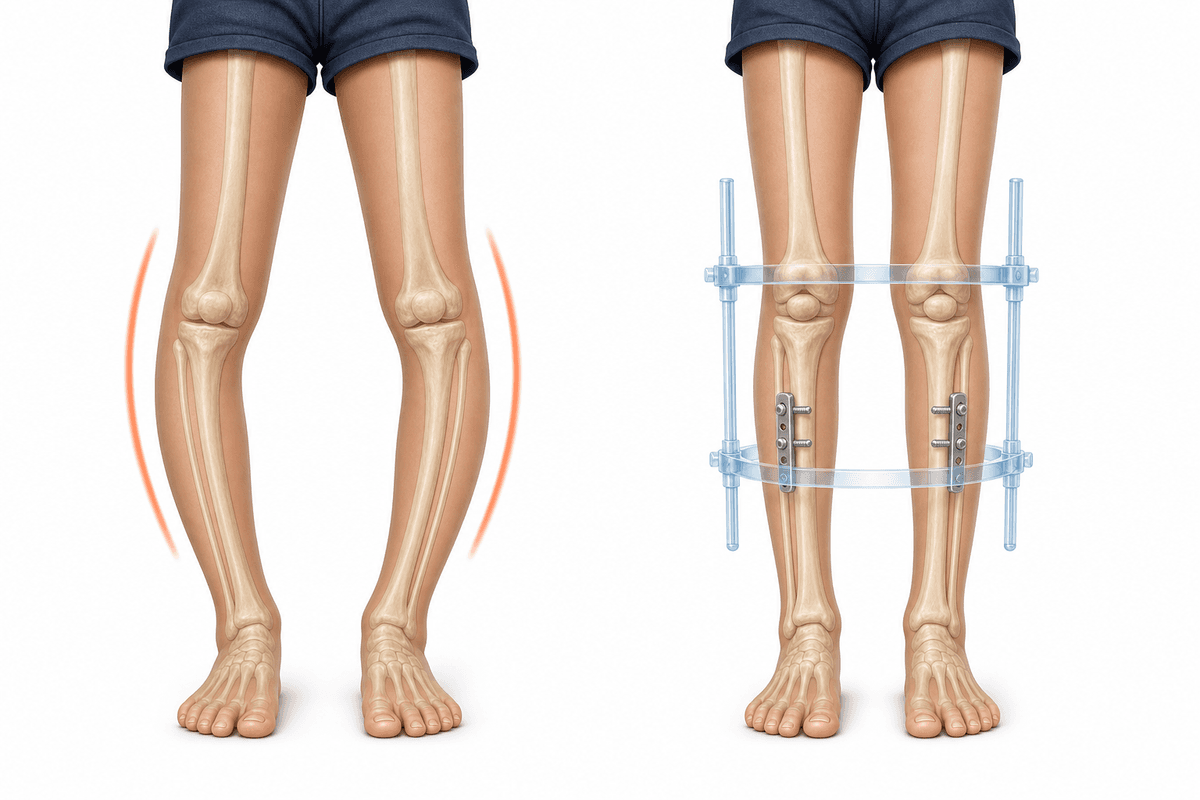
Bow leg correction is a surgical procedure that realigns the leg bones when they curve outward at the knees. Dr Venkatram Thyalapalli evaluates each patient to determine whether the bowing requires treatment through observation, bracing, or surgery. The procedure may involve cutting and repositioning the bone (osteotomy) and using plates or external frames to hold the corrected alignment while healing occurs.
We believe in honest, upfront disclosure so you can make an informed decision.
A step-by-step look at what happens during this procedure.
General anaesthesia is given so the patient is asleep and feels no pain during the procedure.
An incision is made over the affected bone, usually the upper tibia or lower femur, to access the area requiring correction.
The bone is cut in a controlled manner at the planned location to allow realignment of the leg into a straighter position.
The bone segments are repositioned to correct the bow deformity and held in place with metal plates and screws or an external fixator frame.
The incision is closed with sutures, and a sterile dressing is applied. A cast or brace may be used to protect the leg initially.
A structured, patient-first approach from first consultation to full recovery.
Dr Venkatram Thyalapalli reviews X-rays and measures the degree of deformity to plan the precise angle of correction needed for each patient.
The decision between internal plates or external fixators is based on the severity of the deformity, the child's age, and bone quality.
Regular follow-up visits are scheduled to assess bone healing with repeat X-rays and to adjust weight-bearing instructions as healing progresses.
Physical therapy recommendations are provided to restore joint motion and leg strength once the bone has healed sufficiently.
What to expect at each stage of your recovery journey.
The leg is protected in a cast or brace. Pain medication is used, and the patient remains non-weight-bearing or uses crutches. Hospital stay allows monitoring for swelling and early complications.
Gradual transition to partial weight-bearing as directed. Follow-up X-rays check bone alignment and early healing. Physical therapy may begin with gentle range-of-motion exercises.
Once X-rays confirm solid healing, full weight-bearing and strengthening exercises progress. Hardware may be removed in a later minor procedure if it causes discomfort or once growth is complete.
The procedure aims to straighten the leg and distribute weight more evenly across the knee joint, which may reduce abnormal stress on cartilage.
Many patients experience less pain and improved walking after recovery, though outcomes depend on the severity of the original deformity and any associated joint changes.
The procedure corrects bone alignment but cannot reverse cartilage wear or arthritis that developed before surgery.
In growing children, guided growth techniques may be used instead of osteotomy. Full correction may require staged procedures if deformity is severe.
The right choice depends on your diagnosis, risks and circumstances — discussed with you at your consultation.
Mild bow legs in young children often improve naturally with growth. Regular clinical and X-ray follow-up can determine if intervention becomes necessary.
In some cases, especially when bowing is related to nutritional deficiencies like rickets, treating the underlying cause and using braces may improve alignment without surgery.
For children still growing, small plates placed across the growth plate can gradually correct the deformity over time, avoiding the need for a bone cut. This is suitable for moderate deformities in younger patients.
Let's clear up some of the most common myths about bow leg correction.
Get a personalised assessment from an experienced specialist. Understand your options, ask your questions, and decide with confidence.
Consult Venkat Ram Thyalapalli for Bow Leg Correction at any of these 2 centres — pick the one nearest you.