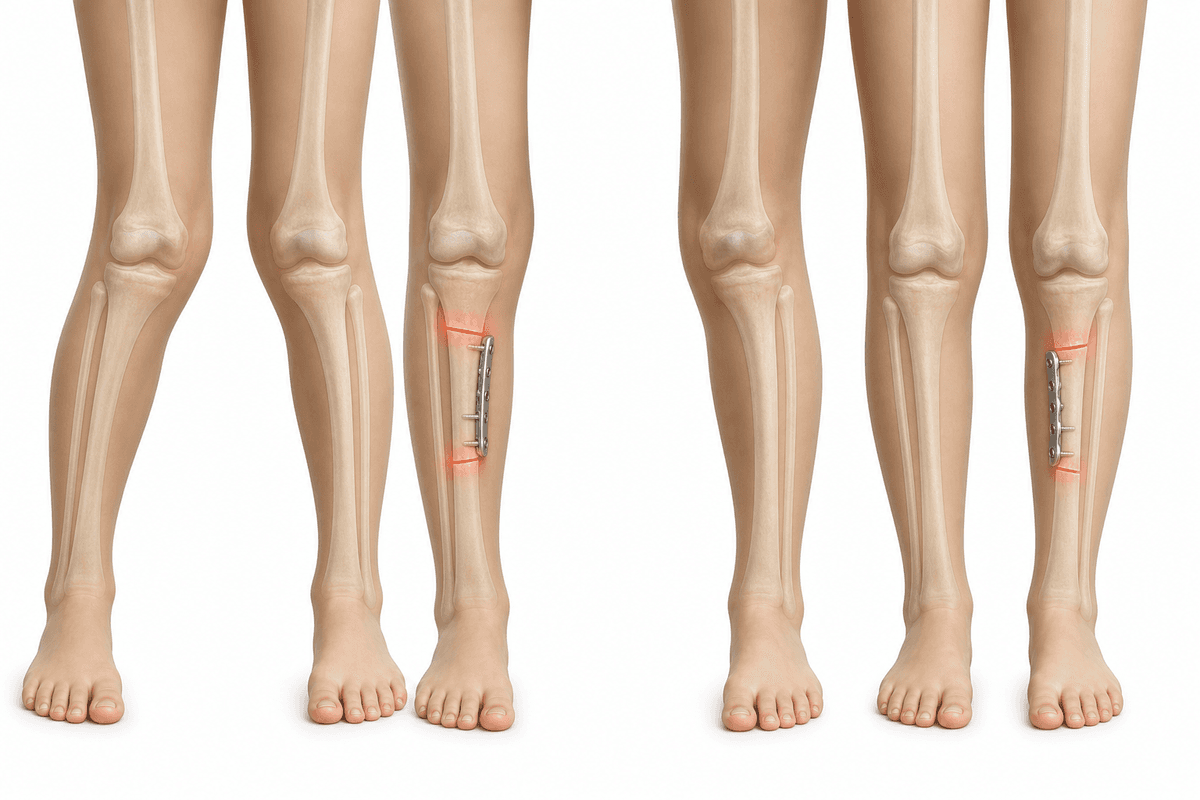
Performed by Dr. Venkat Ram Thyalapalli at Dr Venkatram Thyalapalli
Knock Knee Correction in Hyderabad addresses genu valgum, a condition where knees angle inward and touch while ankles remain apart. This pediatric orthopedic procedure involves surgical or non-surgical interventions to restore proper leg alignment, improve walking mechanics, and prevent long-term joint complications. Dr Venkatram Thyalapalli specializes in personalized knock knee treatment for children and adolescents, utilizing advanced techniques to achieve optimal functional and cosmetic outcomes.
We believe in honest, upfront disclosure so you can make an informed decision.
A step-by-step look at what happens during this procedure.
Comprehensive evaluation including clinical examination, standing X-rays to measure knee angles, and assessment of skeletal maturity to determine the most appropriate treatment approach.
For growing children, temporary implants (eight-plates or staples) are placed on the inner side of the growth plate to slow growth while the outer side continues, gradually correcting the alignment.
For skeletal maturity or severe deformity, controlled bone cuts are made in the femur or tibia, the bone is realigned to correct the angle, and stabilized with plates and screws.
Specialized pediatric orthopedic hardware securely holds the corrected bone position, allowing proper healing while maintaining the desired alignment throughout the recovery period.
The limb is positioned and protected with casting or bracing as needed, with careful attention to maintaining correction and preventing complications during the critical healing phase.
A structured, patient-first approach from first consultation to full recovery.
Dr Venkatram Thyalapalli conducts thorough evaluations using advanced imaging and growth assessment to determine whether guided growth or corrective osteotomy is most appropriate for each child's unique condition and skeletal maturity.
Utilizing child-friendly surgical approaches with smaller incisions, precise implant placement, and tissue-preserving methods to minimize trauma, reduce scarring, and accelerate recovery for young patients.
Dr Thyalapalli provides detailed rehabilitation protocols including physiotherapy guidance, regular monitoring of alignment correction, and adjustment of activity levels to ensure optimal healing and functional recovery.
Continuous monitoring of bone growth, alignment maintenance, and timely implant removal when correction is achieved, ensuring sustained results and preventing recurrence throughout the child's growth years.
What to expect at each stage of your recovery journey.
Pain management, wound care, and immobilization with cast or brace. Non-weight bearing with crutches or wheelchair. Focus on preventing complications and managing swelling through elevation and prescribed medications.
Gradual introduction of gentle range-of-motion exercises. Transition to partial weight bearing as bone healing progresses. Physical therapy begins to restore muscle strength and prevent stiffness while protecting the surgical site.
Progressive weight bearing and strengthening exercises. Gradual return to daily activities and sports under supervision. For guided growth cases, regular monitoring continues until desired correction is achieved and implants are removed.
Significant correction of knee angle, restoring proper anatomical axis and eliminating the inward angulation. Patients achieve straight leg appearance with knees and ankles in balanced alignment.
Improved walking pattern, reduced tripping or awkward gait, and better ability to participate in physical activities and sports without limitation or discomfort.
Resolution of knee, hip, or ankle pain caused by abnormal stress distribution. Reduced muscle fatigue and improved endurance during daily activities and exercise.
Reduced risk of early-onset arthritis, ligament problems, and progressive joint degeneration. Long-term joint health preserved through proper biomechanical alignment established during growth years.
Let's clear up some of the most common myths about knock knee correction.
Get a personalised assessment from an experienced specialist. Understand your options, ask your questions, and decide with confidence.
Consult Venkat Ram Thyalapalli for Knock Knee Correction at any of these 2 centres — pick the one nearest you.