Treated by Dr. Venkat Ram Thyalapalli at Dr Venkatram Thyalapalli
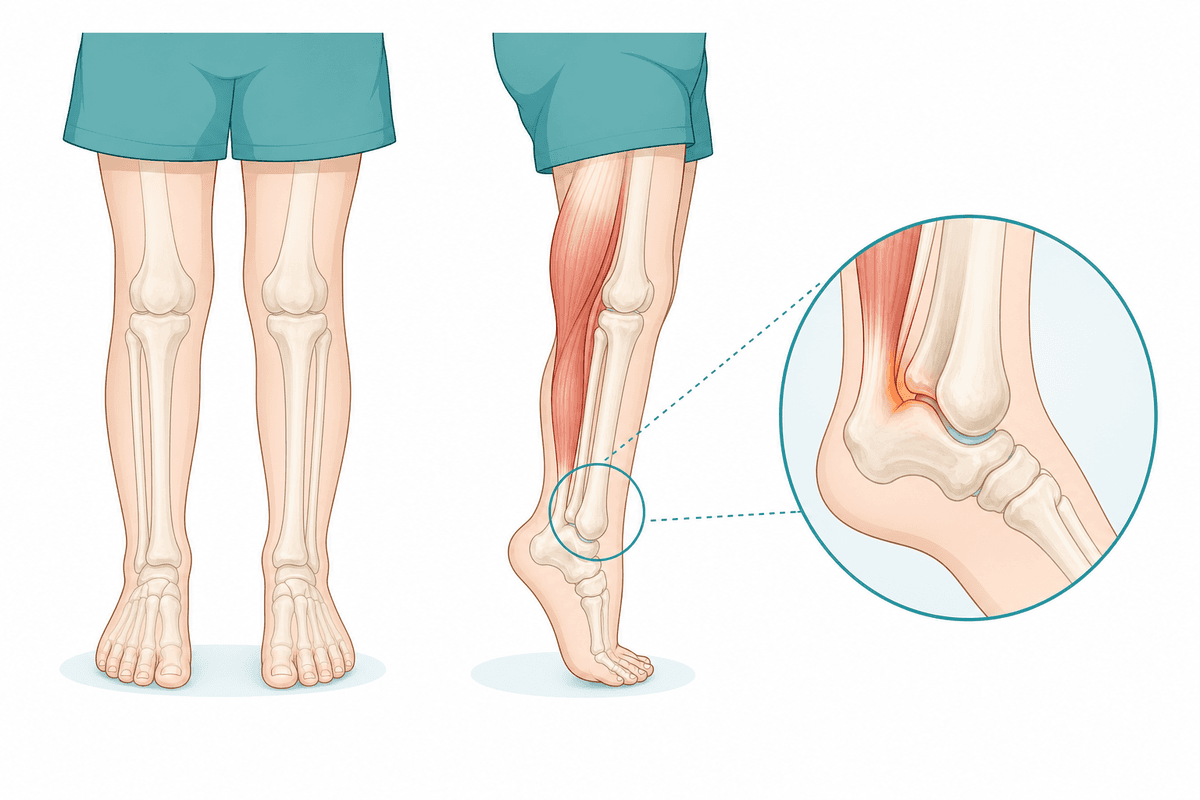
Equinus deformity is a condition affecting ankle joint mobility, commonly seen in pediatric patients in Hyderabad, characterized by limited dorsiflexion where the foot cannot flex upward adequately. This can result from neurological conditions, congenital abnormalities, or post-injury contractures, leading to toe walking and gait disturbances. Dr Venkatram Thyalapalli provides specialized pediatric orthopedic evaluation and comprehensive treatment for equinus deformity at his Hyderabad practice.
Associated with neurological conditions like cerebral palsy, characterized by increased muscle tone in the gastrocnemius-soleus complex causing persistent plantarflexion and inability to achieve neutral ankle position during ambulation.
Results from fixed soft tissue or joint contractures following prolonged immobilization, trauma, or congenital conditions, where structural changes prevent passive dorsiflexion beyond a certain point.
Occurs in children without identifiable neurological or structural abnormality, presenting as habitual toe walking pattern with tight Achilles tendon and reduced ankle dorsiflexion range of motion.
Multiple factors can contribute to the development and progression of this condition.
Equinus Deformity develops gradually. Recognising symptoms early gives you more treatment options.
From conservative to surgical — we always start with the least invasive option first.
A structured, patient-first approach from first visit to full recovery.
Dr Venkatram Thyalapalli conducts thorough physical examination including gait analysis, ankle range of motion assessment, and Silfverskiöld test to differentiate gastrocnemius from gastrosoleus contracture. Advanced imaging and neurological assessment determine underlying cause and severity.
Based on the child's age, severity of contracture, underlying condition, and functional goals, Dr Thyalapalli develops an individualized treatment protocol. This may range from conservative stretching programs to surgical intervention, tailored to achieve optimal outcomes with minimal intervention.
When surgery is indicated, Dr Venkatram Thyalapalli employs meticulous surgical techniques including measured lengthening procedures, ensuring adequate correction while avoiding over-lengthening. Intraoperative assessment confirms appropriate ankle dorsiflexion and maintains plantar flexion strength for functional ambulation.
Dr Thyalapalli implements comprehensive post-treatment rehabilitation combining casting, bracing, physical therapy, and progressive weight-bearing. Regular follow-up appointments monitor healing, prevent recurrence, and adjust the treatment plan to ensure sustained correction and optimal functional outcomes.
What to expect at each phase of recovery.
Initial immobilization in cast or brace maintaining corrected ankle position. Protected weight-bearing with gradual transition to full weight-bearing. Emphasis on wound healing if surgical intervention was performed, with regular cast changes or wound checks.
Transition to ankle-foot orthosis or night splints with intensive physical therapy. Focus on regaining ankle range of motion, strengthening dorsiflexors and plantar flexors, and gait re-education. Progressive return to age-appropriate activities under supervision.
Continued use of night splints or orthotics as prescribed to prevent recurrence. Regular stretching exercises become part of daily routine. Periodic follow-up appointments with Dr Thyalapalli to assess correction maintenance, functional progress, and adjust management as child grows.
Restoration of adequate ankle dorsiflexion range to allow heel-to-toe gait pattern, typically achieving neutral to 10 degrees of dorsiflexion, eliminating compensatory movements and improving overall foot position during walking.
Achievement of heel-strike walking pattern with improved stride length, reduced energy expenditure during ambulation, and elimination of compensatory movements at knee and hip joints, enhancing overall mobility and endurance.
Avoidance of progressive deformities including knee hyperextension, forefoot pressure areas, and hip flexion contractures. Early intervention prevents development of fixed bony deformities requiring more complex surgical reconstruction in future.
Improved ability to participate in age-appropriate activities, wear standard footwear comfortably, reduced pain from abnormal pressure distribution, and increased confidence in social and physical activities with peers.
Untreated equinus deformity progressively worsens, leading to fixed ankle contractures requiring more extensive surgical intervention. Chronic toe walking causes compensatory deformities including knee hyperextension, lumbar lordosis, and hip flexion contractures, significantly impairing functional mobility. Additionally, persistent abnormal pressure distribution results in painful forefoot calluses, joint arthritis, and substantial limitations in activities of daily living and quality of life.
Consult Dr Venkatram Thyalapalli if your child demonstrates persistent toe walking beyond age 3, inability to place heels flat on the ground, or tightness in calf muscles limiting ankle movement. Immediate evaluation is essential if equinus deformity develops following injury, casting, or neurological conditions like cerebral palsy, as early intervention significantly improves treatment outcomes and prevents progressive complications requiring complex surgical management.
Early treatment means more options and better outcomes. Book a consultation to understand your condition and explore the right path forward.
Consult Venkat Ram Thyalapalli for Equinus Deformity at any of these 2 centres — pick the one nearest you.