Treated by Dr. Venkat Ram Thyalapalli at Dr Venkatram Thyalapalli
Limb deformities in Hyderabad affect bone structure and alignment in arms or legs, causing functional and cosmetic concerns in children. These conditions may be present at birth (congenital) or develop due to injury, infection, or growth abnormalities. Dr Venkatram Thyalapalli specializes in comprehensive evaluation and advanced correction techniques for pediatric limb deformities.
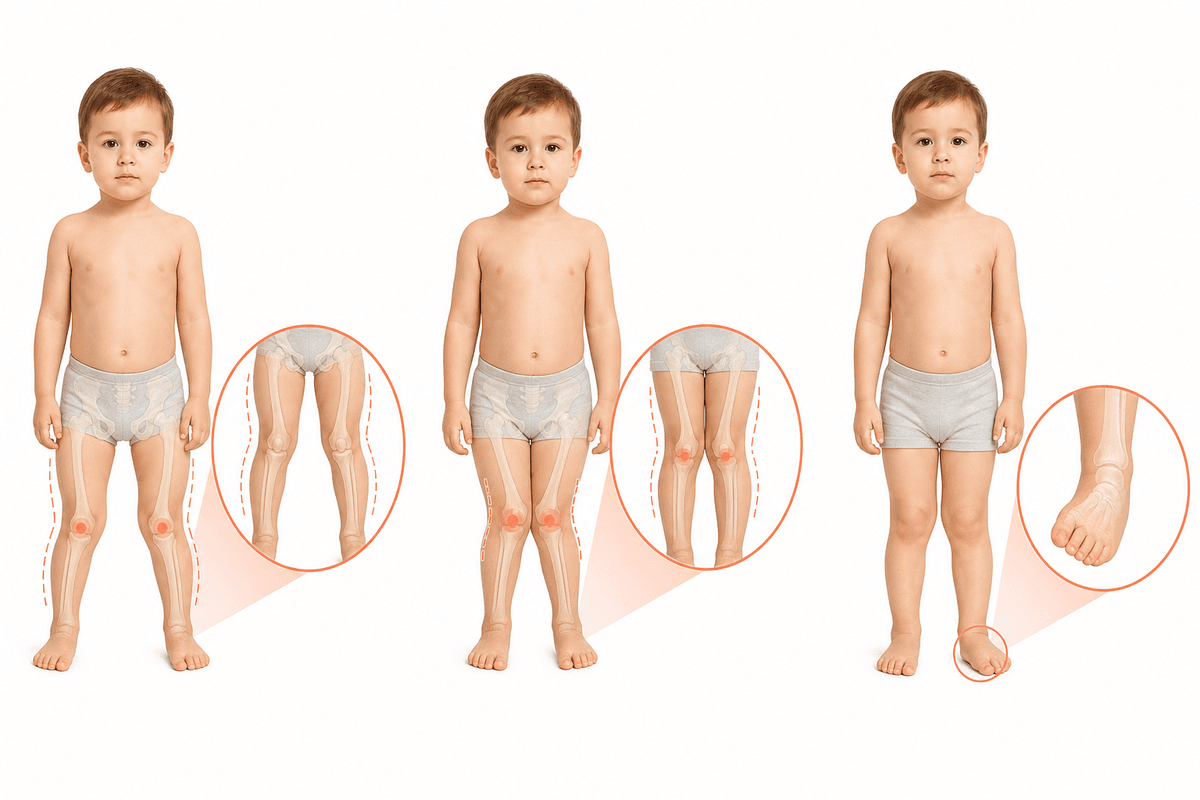
Abnormal angulation of bones causing bowing or knock-knee appearances, affecting knee, tibia, or femur alignment and requiring correction for proper weight distribution.
Twisting of long bones causing in-toeing or out-toeing gait patterns, affecting hip, femur, or tibia rotation and impacting walking mechanics.
Unequal limb lengths causing asymmetric gait and spinal compensation, resulting from growth plate injuries, congenital conditions, or bone diseases.
Multiple factors can contribute to the development and progression of this condition.
Limb Deformities develops gradually. Recognising symptoms early gives you more treatment options.
From conservative to surgical — we always start with the least invasive option first.
A structured, patient-first approach from first visit to full recovery.
Dr Venkatram Thyalapalli performs detailed physical examination, obtains full-length standing radiographs, and measures angular deformities precisely using advanced imaging to determine the exact nature and severity of the limb deformity.
Based on the child's age, growth remaining, deformity severity, and functional impact, Dr Thyalapalli develops an individualized treatment plan, discussing conservative versus surgical options with detailed explanation of expected outcomes and timing.
When surgery is indicated, Dr Venkatram Thyalapalli uses advanced techniques including computer-assisted planning, minimally invasive approaches, and appropriate fixation methods to achieve accurate correction while minimizing tissue trauma and optimizing recovery.
Dr Thyalapalli provides comprehensive post-treatment monitoring with regular clinical and radiographic assessments, coordinates physiotherapy for strength and mobility restoration, and adjusts the treatment plan as the child grows to ensure optimal long-term outcomes.
What to expect at each phase of recovery.
Protection of surgical site, pain management, wound care, and gradual weight-bearing progression. For guided growth, immediate mobilization is encouraged. For osteotomy, protected weight-bearing with crutches or walker is maintained until early bone healing is confirmed.
Progressive physiotherapy focusing on range of motion, muscle strengthening, and gait retraining. Radiographs confirm bone healing progress. Children gradually return to normal daily activities with guidance on appropriate activity levels.
Complete bone consolidation achieved, implant removal performed if temporary fixation was used. Full return to sports and recreational activities permitted. Long-term monitoring continues to ensure maintained correction through remaining growth.
Achievement of normal or near-normal mechanical axis alignment, eliminating abnormal stress on joints and improving overall limb function and appearance.
Enhanced walking mechanics, elimination of limping, and ability to participate fully in age-appropriate physical activities and sports without limitation.
Correction of abnormal loading patterns protects joints from premature arthritis, ensuring long-term joint health and pain-free function into adulthood.
Improved physical appearance and symmetry boost self-confidence, while functional gains enable full participation in social, recreational, and athletic activities with peers.
Untreated limb deformities progressively worsen during growth, leading to severe functional impairment and chronic pain. Abnormal joint loading causes premature arthritis, requiring joint replacement at young ages. Significant deformities result in social and psychological challenges, limiting participation in activities and affecting quality of life throughout adulthood.
Consult Dr Venkatram Thyalapalli if you notice any visible asymmetry, bowing, or angular deformity in your child's limbs, leg length differences causing limping, or worsening alignment despite growth. Early evaluation is crucial as many deformities are easier to correct during active growth phases. Prompt assessment enables timely intervention and optimal outcomes.
Early treatment means more options and better outcomes. Book a consultation to understand your condition and explore the right path forward.
Consult Venkat Ram Thyalapalli for Limb Deformities at any of these 2 centres — pick the one nearest you.