Treated by Dr. Venkat Ram Thyalapalli at Dr Venkatram Thyalapalli
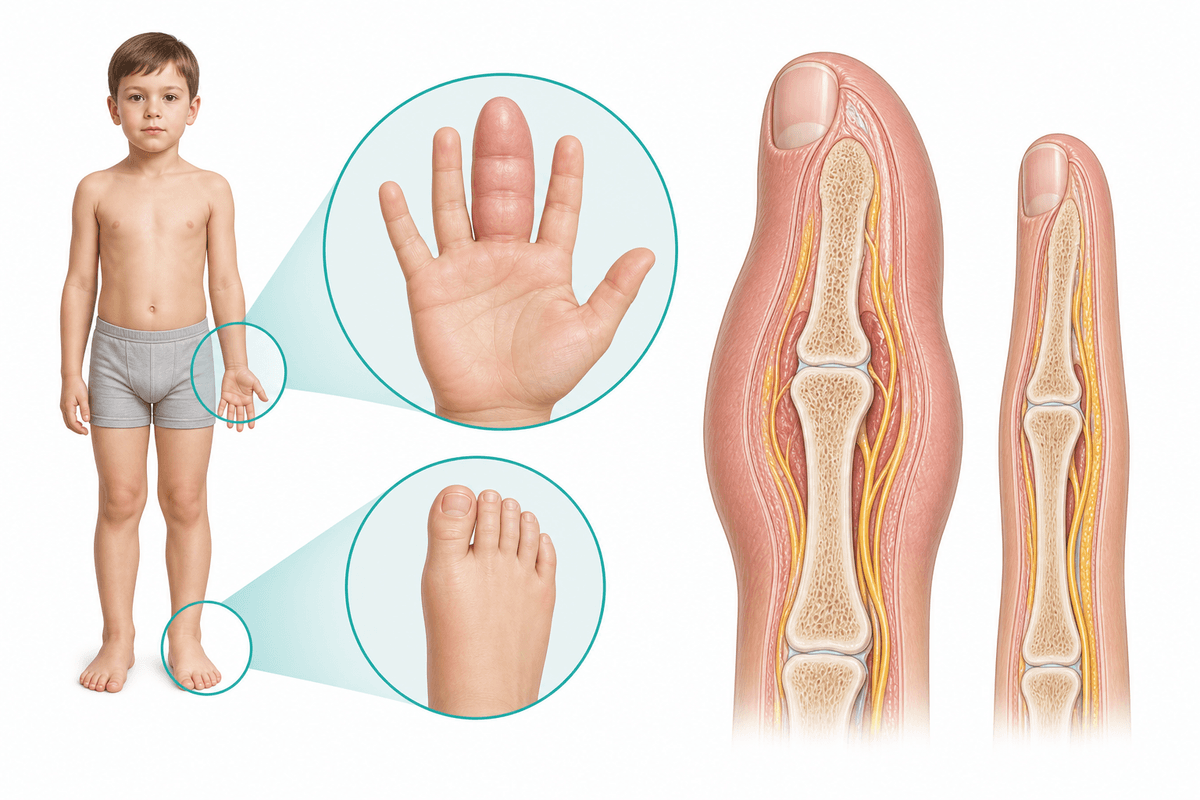
Macrodactyly in Hyderabad is a rare congenital condition characterized by abnormal enlargement of one or more fingers or toes, requiring specialized pediatric orthopedic intervention. The condition results from excessive growth of all tissues in the affected digit, including bone, soft tissue, nerves, and blood vessels, often becoming more pronounced as the child grows. Dr Venkatram Thyalapalli provides comprehensive evaluation and advanced surgical treatment for macrodactyly, ensuring optimal functional and cosmetic outcomes for children.
The affected digit is disproportionately large at birth but grows at the same rate as normal digits. This type typically shows less progressive enlargement and may be more amenable to conservative management in mild cases.
The affected digit grows at a faster rate than adjacent normal digits, leading to increasing disproportion over time. This is the more common type and usually requires early surgical intervention to prevent severe deformity and functional impairment.
Macrodactyly associated with fatty-fibrous overgrowth of the median nerve, most commonly affecting the index and middle fingers. This type often presents with nerve-related symptoms and requires careful surgical planning to address both the enlarged digit and nerve pathology.
Multiple factors can contribute to the development and progression of this condition.
Macrodactyly develops gradually. Recognising symptoms early gives you more treatment options.
From conservative to surgical — we always start with the least invasive option first.
A structured, patient-first approach from first visit to full recovery.
Dr Venkatram Thyalapalli conducts a detailed clinical examination to assess the extent of involvement, measuring the affected digit and documenting growth patterns. Advanced imaging including X-rays and MRI are ordered to evaluate bone structure, soft tissue components, and associated nerve pathology. The type of macrodactyly is classified, and a growth prediction analysis is performed to determine the optimal timing for intervention.
Based on the type, severity, and progression rate, Dr Thyalapalli develops a customized surgical plan that may involve staged procedures. The treatment strategy balances functional improvement, cosmetic outcome, and timing considerations based on the child's age and skeletal maturity. Detailed discussions with parents cover surgical options, expected outcomes, and potential need for multiple procedures as the child grows.
Dr Venkatram Thyalapalli performs meticulous surgical correction using advanced techniques to debulk soft tissues, perform epiphysiodesis, or conduct ray resection as indicated. Special attention is given to preserving neurovascular structures while achieving optimal size reduction. Surgical procedures are timed appropriately based on growth charts and may be staged to minimize complications and optimize outcomes.
Post-operative care includes splinting protocols, wound management, and early mobilization as appropriate. Dr Thyalapalli coordinates with occupational therapists for hand function rehabilitation and monitors healing closely. Long-term follow-up continues through skeletal maturity to assess growth, function, and the potential need for additional procedures, ensuring the best possible outcome for each child.
What to expect at each phase of recovery.
The affected limb is immobilized in a splint or cast to protect surgical sites and ensure proper healing. Pain management, wound care, and elevation are emphasized. Sutures are typically removed at 2-3 weeks, and gentle range of motion exercises begin as directed. Follow-up visits monitor for complications such as infection, vascular compromise, or wound healing issues.
Graduated occupational or physical therapy begins to restore function, strength, and fine motor skills in the affected hand or foot. Scar management techniques including massage and compression may be initiated. Activity restrictions are progressively lifted based on healing progress. Custom splints may be used to maintain alignment and prevent contractures during this critical period.
Regular follow-up appointments continue through skeletal maturity to assess growth patterns, functional outcomes, and cosmetic results. Serial measurements and imaging ensure that progressive macrodactyly is controlled and that epiphysiodesis has been effective. Additional procedures may be planned if needed. Psychosocial support and counseling are provided to help children adapt to their condition and surgical outcomes.
Surgical intervention significantly reduces the size discrepancy between affected and normal digits, resulting in marked cosmetic improvement. Most patients achieve a more balanced hand or foot appearance that reduces self-consciousness and improves social interactions. The degree of improvement depends on severity and type of macrodactyly.
Reduction of digit size improves grip function, fine motor activities, and the ability to perform daily tasks. Children can more easily use writing instruments, manipulate small objects, and participate in age-appropriate activities. For foot involvement, shoe fitting becomes easier and gait patterns may improve significantly.
Timely epiphysiodesis halts progressive growth in the affected digit, preventing further disproportionate enlargement and associated complications. This proactive approach minimizes the risk of angular deformities, joint problems, and nerve compression that can develop with continued unchecked growth throughout childhood and adolescence.
Successful treatment leads to improved self-esteem and confidence in children, particularly during critical developmental years. Reduced cosmetic deformity decreases social stigma and teasing from peers. Families report enhanced quality of life and greater participation in normal childhood activities without the burden of visible deformity.
Untreated macrodactyly leads to progressive enlargement with severe functional impairment, making daily activities like writing, grasping objects, or wearing shoes extremely difficult. The affected digit may develop angular deformities, joint contractures, and degenerative arthritis over time. Nerve compression can cause pain and numbness, while the psychological impact of significant cosmetic deformity can lead to social withdrawal, low self-esteem, and reduced quality of life throughout childhood and into adulthood.
Parents should seek consultation with a pediatric orthopedic specialist like Dr Venkatram Thyalapalli as soon as macrodactyly is noticed, ideally in infancy or early childhood, to establish baseline measurements and develop an appropriate treatment timeline. Immediate evaluation is warranted if there are signs of rapid growth acceleration, functional limitations affecting daily activities, pain, numbness, or if the child experiences psychological distress related to the appearance of the affected digit. Early intervention allows for optimal timing of surgical procedures and better long-term outcomes.
Early treatment means more options and better outcomes. Book a consultation to understand your condition and explore the right path forward.
Consult Venkat Ram Thyalapalli for Macrodactyly at any of these 2 centres — pick the one nearest you.