Treated by Dr. Venkat Ram Thyalapalli at Dr Venkatram Thyalapalli
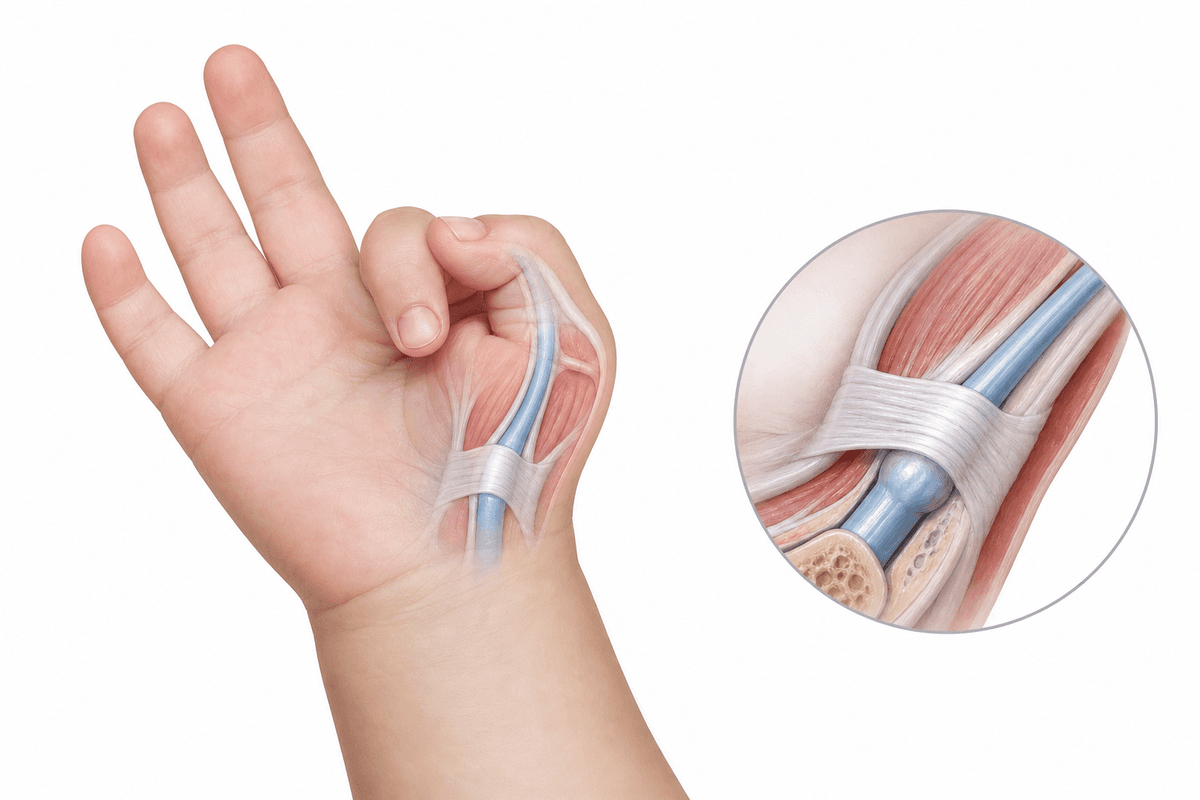
Trigger thumb is a condition affecting children in Hyderabad where the thumb gets stuck in a bent position and may click or snap when straightened. It occurs when the tendon that bends the thumb becomes irritated or inflamed, causing it to catch on the tendon sheath. This can limit thumb movement and cause discomfort during daily activities. Dr Venkatram Thyalapalli provides specialized diagnosis and treatment for trigger thumb in pediatric patients.
Present from birth or develops in early infancy, typically noticed when the child is between 6 months to 3 years old. The thumb remains locked in a flexed position with a palpable nodule at the base of the thumb.
Develops later in childhood due to repetitive gripping activities or trauma. The thumb intermittently catches or locks during movement, with symptoms varying in severity throughout the day.
Affects both thumbs simultaneously, occurring in approximately 25-30% of pediatric cases. Requires careful evaluation to rule out associated connective tissue disorders or systemic conditions.
Multiple factors can contribute to the development and progression of this condition.
Trigger Thumb develops gradually. Recognising symptoms early gives you more treatment options.
From conservative to surgical — we always start with the least invasive option first.
A structured, patient-first approach from first visit to full recovery.
Dr Venkatram Thyalapalli performs a thorough physical examination of the thumb, assessing the degree of triggering, range of motion, and palpating for the characteristic nodule. He evaluates the child's age, symptom duration, functional impact, and discusses parental concerns to develop an individualized treatment plan.
Dr Thyalapalli explains the condition mechanism to parents, discussing all treatment options from conservative management to surgical intervention. He provides realistic expectations for each approach based on the child's age and severity, ensuring families understand the natural history and evidence-based outcomes for trigger thumb.
For cases requiring surgery, Dr Venkatram Thyalapalli performs the A1 pulley release procedure using meticulous microsurgical techniques to ensure complete release while protecting surrounding structures. The procedure is conducted with precision to minimize scarring and optimize functional recovery for the growing child.
Dr Thyalapalli provides comprehensive postoperative instructions including wound care, activity guidelines, and pain management. He schedules follow-up appointments to monitor healing, ensure full thumb mobility is restored, and address any parental concerns during the recovery process.
What to expect at each phase of recovery.
The surgical wound is kept clean and dry with minimal dressing. Parents are encouraged to allow gentle thumb movement immediately. Pain is typically mild and controlled with simple analgesics. The child can return to most normal activities avoiding heavy gripping.
Sutures are removed at 10-14 days and thumb function rapidly improves. Scar massage may be initiated to soften the incision. Children naturally increase thumb use as discomfort resolves. Full range of motion is usually achieved during this period.
The thumb returns to completely normal function with resolution of all triggering and locking. The surgical scar fades and becomes barely noticeable. Children resume all activities without restriction including sports and fine motor tasks requiring full thumb mobility.
Over 95% of children achieve complete resolution of thumb triggering and locking after surgical release, with restoration of full range of motion and pain-free thumb function for all daily activities.
The small surgical incision heals with an inconspicuous scar at the thumb base that fades significantly over time, becoming barely visible in most children within one year of surgery.
Children typically resume normal play and school activities within 1-2 weeks after surgery, with no long-term activity restrictions or need for ongoing therapy in the majority of cases.
Recurrence of trigger thumb after complete A1 pulley release is extremely rare, with successful long-term outcomes maintained into adulthood without need for revision surgery in over 98% of cases.
Untreated trigger thumb typically does not resolve spontaneously in children over one year of age, leading to persistent functional limitation and progressive thumb stiffness. The thumb may become fixed in a flexed position, causing difficulty with gripping, pinching, and fine motor tasks essential for school and play activities. Prolonged locking can result in joint contracture and secondary developmental delays in hand function, making later surgical correction more challenging with potentially less optimal outcomes.
Parents should seek evaluation if they notice their child's thumb clicking, popping, or getting stuck in a bent position, or if they feel a small bump at the base of the thumb. Immediate consultation with Dr Venkatram Thyalapalli is recommended if the thumb becomes locked and cannot be straightened, if there is pain with thumb movement, or if the condition interferes with the child's ability to use their hand for age-appropriate activities. Early assessment allows for timely intervention and optimal treatment outcomes.
Early treatment means more options and better outcomes. Book a consultation to understand your condition and explore the right path forward.
Consult Venkat Ram Thyalapalli for Trigger Thumb at any of these 2 centres — pick the one nearest you.