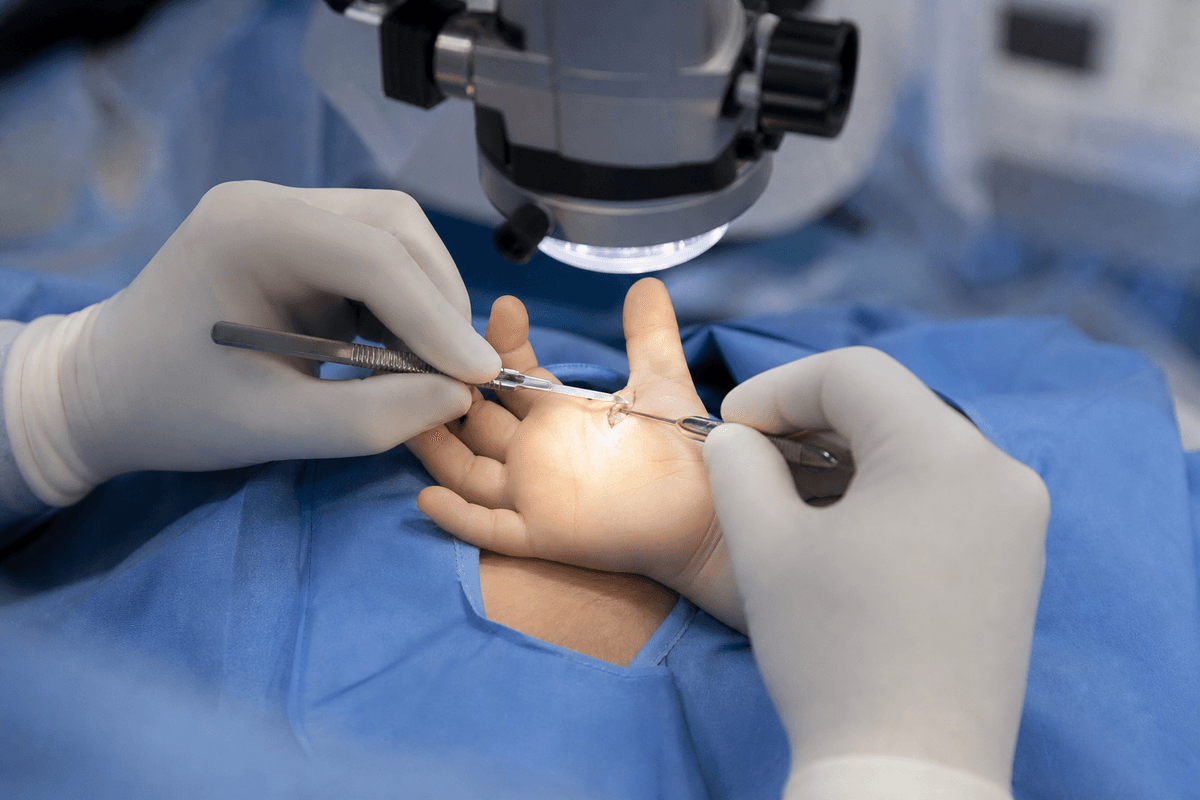
Performed by Dr. Venkat Ram Thyalapalli at Dr Venkatram Thyalapalli
Trigger thumb release is a small operation to correct a thumb that gets stuck in a bent position or catches when you try to move it. The surgeon cuts a tight band of tissue (the pulley) that is blocking the tendon from moving smoothly. This allows the thumb to straighten and bend freely again.
We believe in honest, upfront disclosure so you can make an informed decision.
A step-by-step look at what happens during this procedure.
The procedure is performed under local anaesthesia (numbing the hand) in adults, or general anaesthesia (putting the child to sleep) in young children.
A small cut, usually around one centimetre, is made at the base of the thumb or in the palm.
The surgeon identifies the tight A1 pulley—a band of tissue around the tendon—and carefully divides it to free the tendon.
The thumb is gently moved to confirm that the tendon now glides smoothly and the locking has been corrected.
The skin is closed with sutures, and a light dressing is applied to protect the wound.
A structured, patient-first approach from first consultation to full recovery.
Dr Venkatram Thyalapalli examines the thumb, confirms the diagnosis and discusses the procedure, expected recovery and any questions with you or your family.
The procedure is performed carefully to release the constricting pulley while protecting nearby nerves and blood vessels.
After the procedure, guidance is provided on wound care, activity and when to start gentle thumb movements.
A follow-up appointment is scheduled to check healing, remove sutures if needed, and ensure the thumb is moving well.
What to expect at each stage of your recovery journey.
Keep the hand elevated and the dressing dry. Mild pain and swelling are normal. Follow pain relief advice from your clinical team. Avoid heavy use of the thumb.
Gentle thumb movements may be started as guided. The wound begins to heal. Sutures are usually removed around 10-14 days. Light tasks with the hand can gradually resume.
Strength and movement continue to improve. Most daily activities can be resumed. The scar softens and fades over time. Individual recovery timelines vary; follow the specific instructions given to you.
The procedure aims to allow the thumb to bend and straighten smoothly without locking or catching. Most people regain full or near-full movement.
The goal is to eliminate the catching or stuck feeling that occurs with trigger thumb, making daily tasks easier.
A small scar will remain at the incision site. It typically fades with time but does not disappear completely.
While the procedure addresses the mechanical block, it does not prevent other hand conditions from developing in the future. Rarely, stiffness or incomplete release may occur and require further care.
The right choice depends on your diagnosis, risks and circumstances — discussed with you at your consultation.
In very young infants, trigger thumb may sometimes resolve on its own. Waiting and monitoring with reduced stress on the thumb may be considered in select cases, depending on age and severity.
Keeping the thumb in a straight position with a splint has been tried in some cases, though it is less commonly effective than surgery, especially in children. The decision depends on individual circumstances.
An injection of steroid medication near the tendon may reduce inflammation and improve symptoms in adults. It is less commonly used in children and may not provide permanent relief. Suitability depends on diagnosis and risks.
Let's clear up some of the most common myths about trigger thumb release.
Get a personalised assessment from an experienced specialist. Understand your options, ask your questions, and decide with confidence.
Consult Venkat Ram Thyalapalli for Trigger Thumb Release at any of these 2 centres — pick the one nearest you.