Treated by Dr. Venkat Ram Thyalapalli at Dr Venkatram Thyalapalli
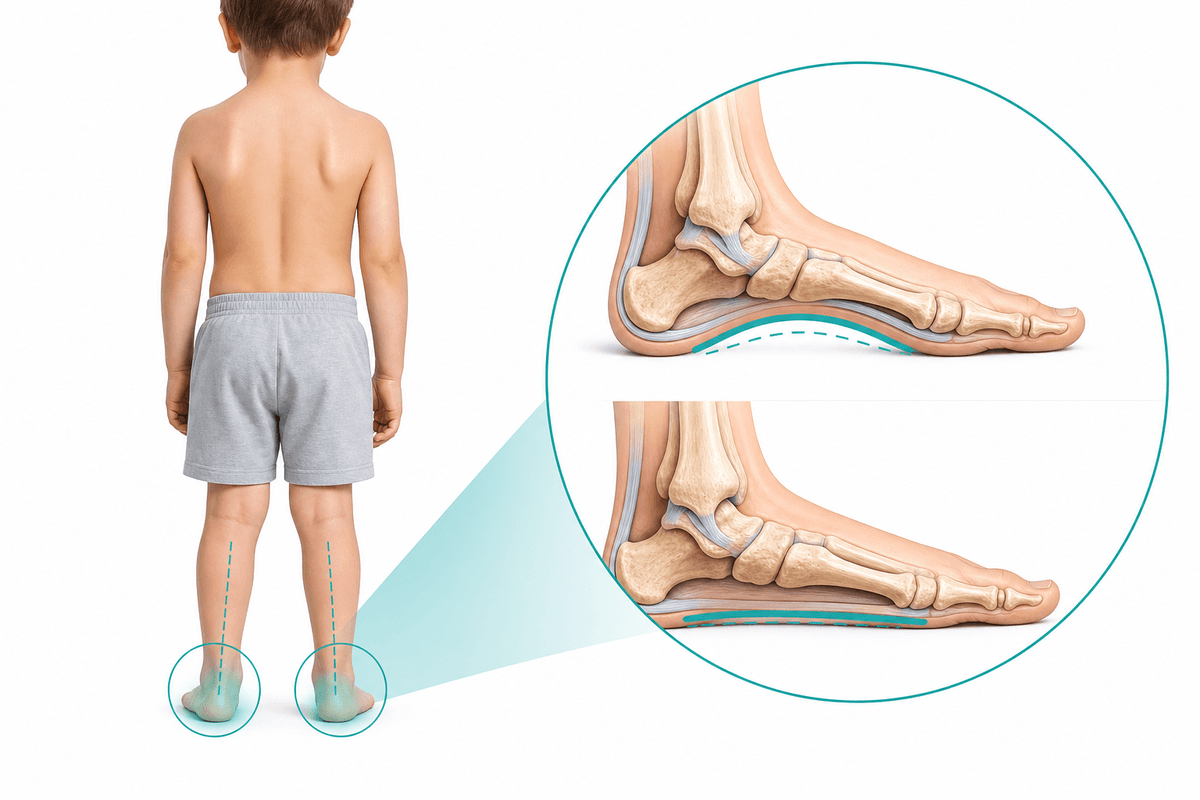
Flatfoot, also known as pes planus, is a common condition in Hyderabad where the arch of the foot is flattened, causing the entire sole to touch the ground. This condition can be flexible (arch appears when not bearing weight) or rigid (no arch in any position), and may affect one or both feet. Dr Venkatram Thyalapalli specializes in pediatric flatfoot evaluation and treatment, offering comprehensive care from conservative management to surgical correction.
The most common type where the arch appears when the child stands on tiptoes or sits but disappears with weight-bearing. Usually painless and often resolves naturally as children grow. May require treatment if pain develops or persists beyond age 10.
A less common but more serious type where the arch is absent in all positions, whether weight-bearing or not. Often associated with tarsal coalition (abnormal connection between foot bones) or other structural abnormalities. Typically causes pain and limited foot motion, requiring specialized intervention.
Develops later due to posterior tibial tendon dysfunction, injury, or conditions like cerebral palsy or muscular dystrophy. The arch gradually collapses over time, leading to progressive deformity. May cause significant pain and difficulty with walking or standing for long periods.
Multiple factors can contribute to the development and progression of this condition.
Flatfoot develops gradually. Recognising symptoms early gives you more treatment options.
From conservative to surgical — we always start with the least invasive option first.
A structured, patient-first approach from first visit to full recovery.
Dr Venkatram Thyalapalli performs detailed physical examination assessing arch appearance in weight-bearing and non-weight-bearing positions, heel alignment, foot flexibility, and gait pattern. Advanced imaging including weight-bearing X-rays and CT scans identify structural abnormalities like tarsal coalition.
Based on the child's age, type of flatfoot, severity of symptoms, and functional limitations, Dr Thyalapalli develops an individualized treatment plan. This ranges from observation and conservative management for flexible flatfoot to surgical correction for rigid or symptomatic cases, always prioritizing the least invasive effective option.
When surgery is indicated, Dr Venkatram Thyalapalli performs specialized pediatric flatfoot procedures including subtalar arthroereisis, calcaneal osteotomy, tendon transfers, and tarsal coalition resection. Advanced surgical techniques minimize tissue trauma, preserve joint function, and optimize long-term outcomes for growing children.
Dr Thyalapalli oversees comprehensive post-treatment rehabilitation including progressive weight-bearing protocols, physical therapy for strength and flexibility, orthotic management, and regular follow-up monitoring. This structured approach ensures proper healing, optimal arch development, and return to full activity levels.
What to expect at each phase of recovery.
For surgical cases, this phase involves cast or boot immobilization with limited or no weight-bearing initially. Pain management, wound care, and elevation are essential. For conservative treatment, orthotics are gradually introduced with activity modification and physical therapy initiation.
Progressive weight-bearing begins with transition from cast to walking boot or supportive footwear. Physical therapy intensifies focusing on range of motion, strengthening, and proprioception exercises. Gradual return to daily activities with continued use of orthotics or supportive footwear as indicated.
Full weight-bearing achieved with gradual return to sports and high-impact activities. Continued strengthening exercises and orthotic use as needed. Regular follow-up appointments monitor arch development, alignment, and functional outcomes. Most children achieve complete recovery with excellent long-term results.
Correction of flatfoot deformity restores normal arch structure and proper heel alignment, enabling more efficient gait mechanics and improved overall foot function during walking, running, and sports activities.
Treatment effectively eliminates foot and ankle pain, allowing children to participate fully in physical activities without discomfort or fatigue. This improves quality of life and enables normal childhood development and social participation.
Early intervention prevents development of secondary complications including ankle instability, knee and hip problems, abnormal gait patterns, and premature arthritis that can result from untreated flatfoot deformity in adulthood.
Successful treatment provides lasting correction with maintained arch structure through skeletal maturity and into adulthood. Children achieve normal foot mechanics and biomechanics, supporting lifelong mobility and activity without limitations.
Untreated symptomatic flatfoot can lead to chronic foot and ankle pain, progressive deformity, and difficulty with physical activities. Over time, abnormal biomechanics may cause secondary problems including ankle instability, knee and hip pain, abnormal gait patterns, and premature degenerative arthritis in multiple joints. Early intervention prevents these complications and ensures optimal long-term foot function.
Parents should consult Dr Venkatram Thyalapalli if their child experiences foot or ankle pain, difficulty keeping up with peers during physical activities, or visible foot deformity beyond age 6-7 years. Immediate evaluation is warranted for rigid flatfoot with stiffness, sudden onset of flatfoot after injury, or flatfoot associated with neuromuscular conditions. Early assessment ensures timely intervention and optimal outcomes.
Early treatment means more options and better outcomes. Book a consultation to understand your condition and explore the right path forward.
Consult Venkat Ram Thyalapalli for Flatfoot at any of these 2 centres — pick the one nearest you.