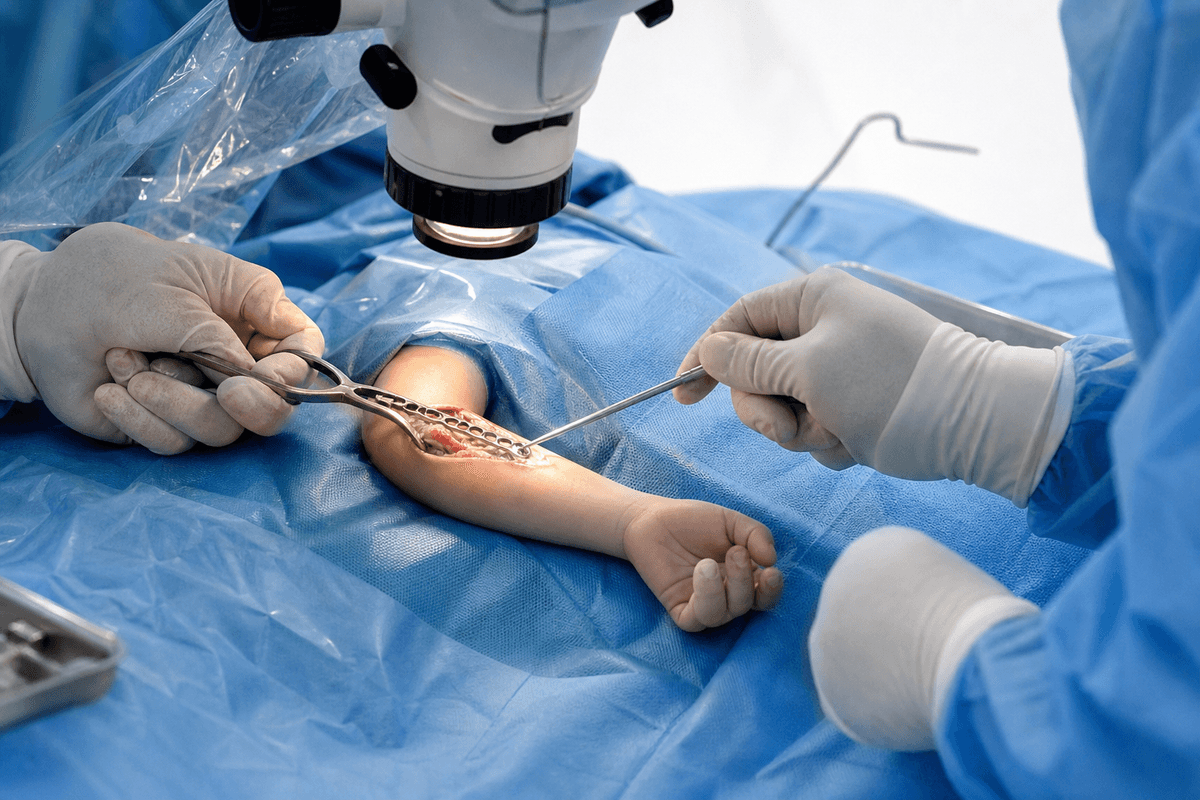
Performed by Dr. Venkat Ram Thyalapalli at Dr Venkatram Thyalapalli
Fracture fixation is a surgical procedure that uses pins, plates, screws, rods or external frames to hold broken bone fragments in the correct position while they heal. Dr Venkatram Thyalapalli performs fracture fixation for children and adolescents with complex or displaced fractures that cannot heal properly with casting alone.
We believe in honest, upfront disclosure so you can make an informed decision.
A step-by-step look at what happens during this procedure.
The child is given general anaesthesia so they remain asleep and pain-free throughout the procedure.
An incision is made over the fracture site to access the broken bone fragments, or small incisions are made for minimally invasive approaches.
The broken bone pieces are carefully repositioned into their correct anatomical alignment under direct vision or imaging guidance.
Plates, screws, pins or rods are inserted across the fracture to hold the bone fragments securely in position, or an external fixator frame is attached through the skin.
The incision is closed with sutures, and a splint or cast may be applied for additional support during early healing.
A structured, patient-first approach from first consultation to full recovery.
Dr Venkatram Thyalapalli reviews imaging studies to determine fracture pattern, selects appropriate implants for the child's bone size, and discusses the approach with the family.
Bone fragments are carefully aligned to restore length, rotation and angulation, with special attention to protecting growth plates in growing children.
Fixation devices are chosen based on fracture type, bone quality and the child's growth potential, using paediatric-specific implants where appropriate.
The child is monitored for pain control, wound healing and early signs of complications, with follow-up imaging to confirm bone position and healing progress.
What to expect at each stage of your recovery journey.
Pain management, wound care and elevation are priorities. Weight-bearing restrictions depend on fracture location. Timelines vary by individual case and clinical instructions take priority.
The bone begins to knit together over several weeks. Activity is gradually increased based on imaging findings and clinical examination. Physiotherapy may begin for joint mobility.
Once the fracture has healed sufficiently, strengthening exercises and return to normal activities progress under guidance. Implant removal may be planned if appropriate.
Fracture fixation aims to hold bones in correct position during healing, reducing the risk of malunion or deformity. Alignment quality depends on fracture complexity and tissue condition.
Stable fixation may allow earlier weight-bearing and joint movement compared to prolonged casting, potentially improving muscle strength and joint flexibility. Recovery speed varies widely.
In children, fixation aims to preserve growth plate function where possible. Some growth disturbances may still occur depending on initial injury severity and fracture location.
Fracture fixation does not eliminate all risks of stiffness, limb length difference or the need for further procedures. Outcomes depend on injury pattern, healing biology and adherence to rehabilitation.
The right choice depends on your diagnosis, risks and circumstances — discussed with you at your consultation.
Non-displaced or stable fractures in children often heal well with closed reduction and immobilisation in a cast. Considered when fracture alignment is acceptable and surgical risks outweigh benefits.
Temporary skeletal or skin traction applies gentle pulling force to align fractures before definitive treatment. May be used in very young children or unstable fractures awaiting surgery.
Some minimally displaced fractures in non-weight-bearing bones may be managed with activity restriction and symptom control alone. Choice depends on fracture location, child's age and healing potential.
Let's clear up some of the most common myths about fracture fixation.
Get a personalised assessment from an experienced specialist. Understand your options, ask your questions, and decide with confidence.
Consult Venkat Ram Thyalapalli for Fracture Fixation at any of these 2 centres — pick the one nearest you.