Treated by Dr. Venkat Ram Thyalapalli at Dr Venkatram Thyalapalli
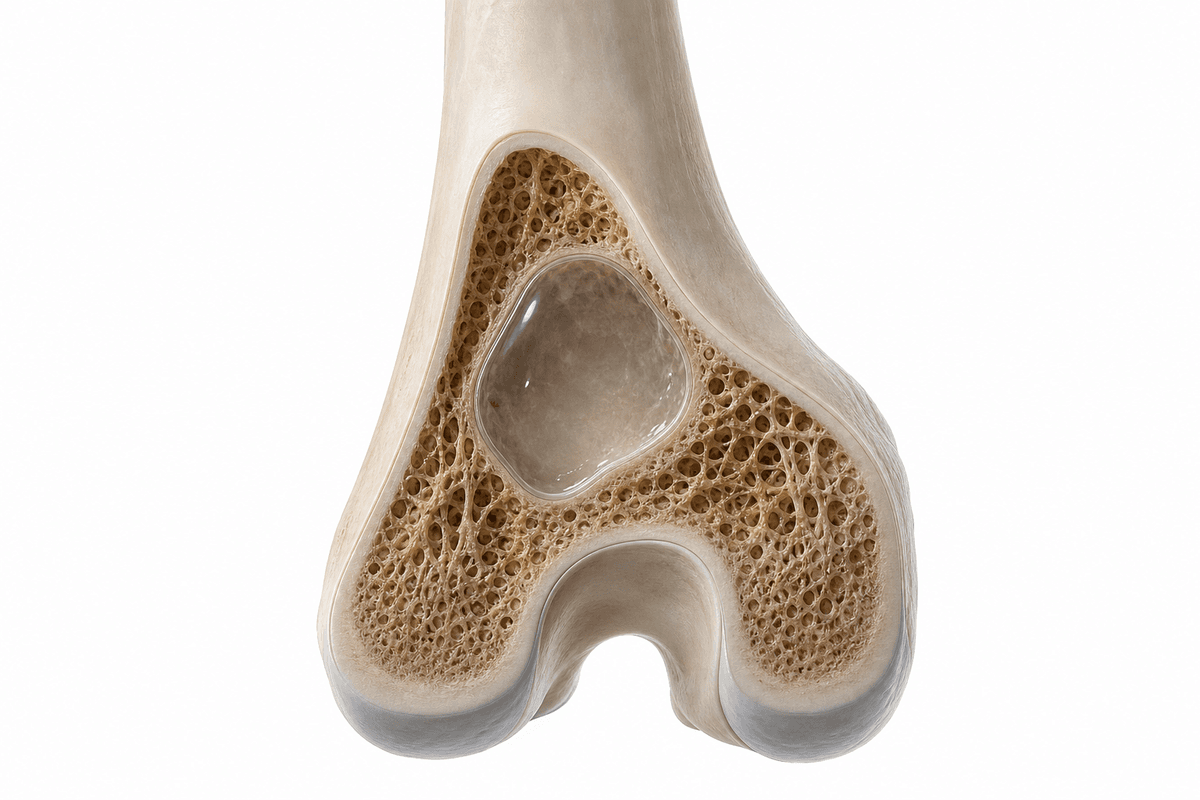
A simple bone cyst is a fluid-filled cavity that forms inside a bone, most often in the upper arm or thigh bone of children and adolescents. These cysts are not cancerous and often cause no symptoms unless the bone weakens enough to fracture. Dr Venkatram Thyalapalli evaluates and manages simple bone cysts based on each child's age, symptoms, and risk of fracture.
A cyst located close to the growth plate (the area where bone grows), commonly seen in younger children. These cysts are more likely to cause fractures and less likely to heal on their own.
A cyst that has moved away from the growth plate as the bone grows, typically in older children or adolescents. These cysts are more stable and have a better chance of healing without treatment.
A cyst that has caused the surrounding bone to break. The fracture may sometimes prompt the cyst to begin healing, though not all fractured cysts resolve completely.
Multiple factors can contribute to the development and progression of this condition.
Recognising the signs early gives you more treatment options.
Diagnosis begins with a clinical history and physical examination, followed by imaging studies to confirm the cyst and assess bone strength. Not every child requires all tests; the choice depends on individual findings.
From conservative to surgical — we always start with the least invasive option first.
A structured, patient-first approach from first visit to full recovery.
Dr Venkatram Thyalapalli takes a careful history, examines the limb, and reviews X-rays to confirm the diagnosis and assess whether the cyst is active or latent and how much it has weakened the bone.
He discusses whether observation, injection, or surgery is most appropriate based on the child's age, cyst location, symptoms, and fracture risk, tailoring the plan to each family's situation.
When a procedure is needed, Dr Venkatram Thyalapalli uses techniques suited to paediatric bones, aiming to minimise discomfort and support normal growth.
He provides follow-up with repeat imaging to track healing and adjusts activity guidance as the cyst resolves or stabilises, ensuring the child can safely return to play and daily routines.
What to expect at each phase of recovery.
After a fracture or procedure, the limb is protected with a cast or limited activity until early healing is confirmed. Timelines vary; some children may need a few weeks, others longer.
As imaging shows bone strengthening, gentle use of the limb resumes, advancing step by step from daily tasks to more active play. Individual progress guides the pace.
Periodic X-rays continue for months to years, especially in growing children, to ensure the cyst does not recur and that the bone remains strong through growth spurts and into adolescence.
With observation or treatment, a good number of simple bone cysts fill in with bone and do not cause further problems. The response varies and some cysts may persist or recur.
Successful healing or stabilisation of the cyst lowers the chance of fractures, allowing children to participate more freely in activities. Complete elimination of risk is not always achieved.
Most children regain full use of the affected arm or leg once the cyst has healed or stabilised. Rarely, a large or recurrent cyst may cause lasting bone changes.
Some cysts come back even after treatment, requiring repeat injection or surgery. Ongoing monitoring helps detect recurrence early so it can be managed promptly.
An untreated simple bone cyst that weakens the bone significantly may lead to repeated fractures, which can disrupt a child's activities and schooling. While some cysts heal on their own as the child grows, others persist and continue to pose a fracture risk. Early recognition and appropriate management reduce these risks and support healthier bone development.
Seek care if your child has unexplained pain or swelling in an arm or leg, especially after a minor injury, or if an X-ray taken for another reason shows a bone cyst. A paediatric orthopaedic surgeon can evaluate the cyst, determine its type and fracture risk, and guide you on whether observation or treatment is needed.
Early treatment means more options and better outcomes. Book a consultation to understand your condition and explore the right path forward.
Consult Venkat Ram Thyalapalli for Simple Bone Cyst at any of these 2 centres — pick the one nearest you.