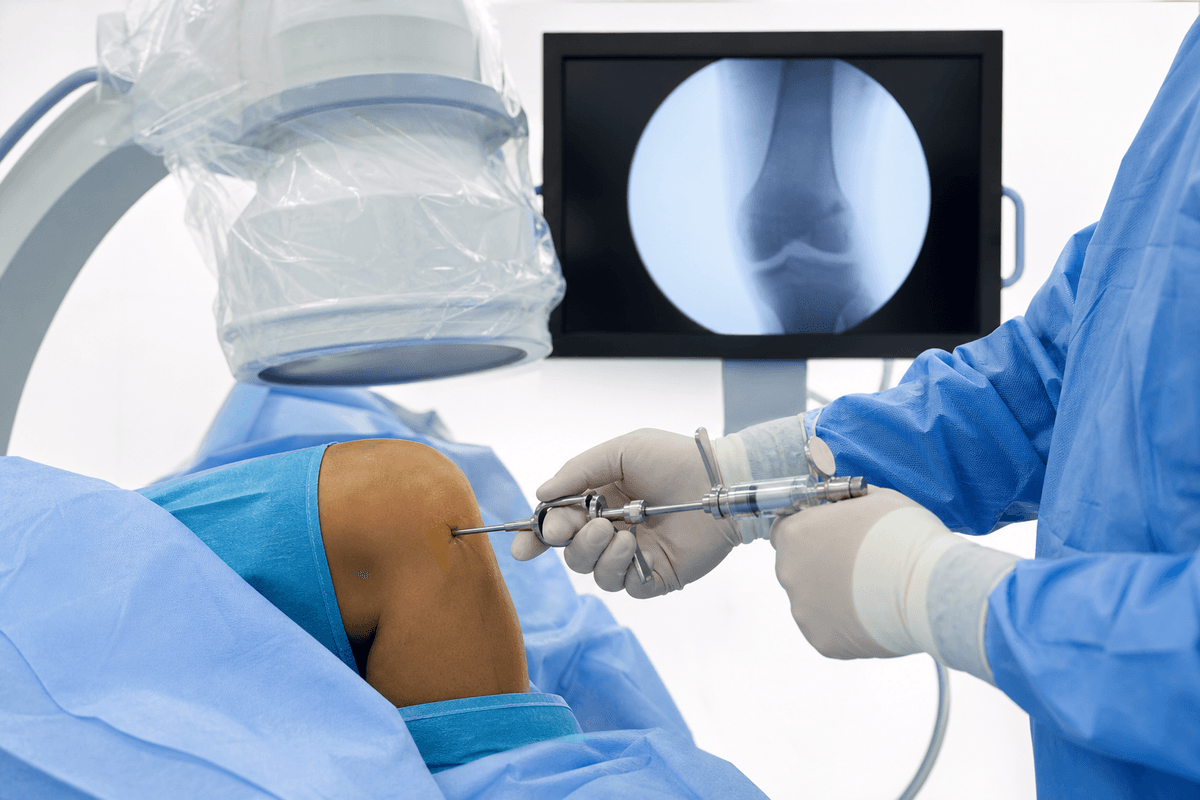
Performed by Dr. Venkat Ram Thyalapalli at Dr Venkatram Thyalapalli
Aneurysmal bone cyst treatment addresses fluid-filled cavities that develop in bones, most often in children and adolescents. These cysts can cause pain, swelling, and bone weakening. Dr Venkatram Thyalapalli evaluates each case individually to determine whether the cyst requires curettage (surgical removal), injection therapy, or observation, depending on its size, location, and symptoms.
We believe in honest, upfront disclosure so you can make an informed decision.
A step-by-step look at what happens during this procedure.
General anaesthesia is given so the child remains asleep and comfortable throughout the procedure.
An incision is made over the affected bone, and the bone surface is opened to reach the cyst cavity.
The cyst lining and fluid are scraped out carefully using a curette to remove as much abnormal tissue as possible.
The empty space may be filled with bone graft material to encourage new bone growth and strengthen the area.
The incision is closed with sutures, and a dressing or cast may be applied to protect the site during healing.
A structured, patient-first approach from first consultation to full recovery.
Dr Venkatram Thyalapalli examines X-rays and MRI scans to understand the cyst's size, location, and relationship to growth plates and joints.
The approach is chosen based on the individual case—curettage with bone grafting for most lesions, or sclerotherapy injection for selected cysts.
Special care is taken to preserve growth plates in growing children to avoid future limb-length or alignment problems.
Regular imaging and clinical checks are scheduled to monitor healing, detect any recurrence early, and guide rehabilitation timing.
What to expect at each stage of your recovery journey.
Pain is managed with medication, and the limb is kept protected with a splint or cast. Weight-bearing may be restricted depending on the bone involved.
Gentle range-of-motion exercises begin once the surgeon permits. Swelling and stiffness gradually decrease with physiotherapy guidance.
Bone healing is monitored with X-rays. Gradual return to school, sports, and normal activities is guided by imaging progress and clinical assessment.
The procedure aims to remove the cyst tissue and allow healthy bone to grow in its place, reducing pain and fracture risk.
Aneurysmal bone cysts can return even after thorough treatment, especially in younger children. Repeat imaging and sometimes further intervention may be needed.
Most children regain full movement and strength in the affected limb, though recovery timelines vary by location and extent of surgery.
If the cyst arose from another bone problem, that condition may need separate management. Treatment addresses the cyst itself, not all possible causes.
The right choice depends on your diagnosis, risks and circumstances — discussed with you at your consultation.
Small, asymptomatic cysts in non-critical locations may be monitored without immediate intervention. This is considered when the risk of fracture is low and the child has no pain.
A chemical agent is injected into the cyst to promote healing without open surgery. This may be tried for certain cyst types or locations, though it can require multiple sessions.
Blood vessels feeding the cyst are blocked using interventional radiology techniques. This option is considered for cysts in difficult surgical locations such as the spine or pelvis.
Let's clear up some of the most common myths about aneurysmal bone cyst treatment.
Get a personalised assessment from an experienced specialist. Understand your options, ask your questions, and decide with confidence.
Consult Venkat Ram Thyalapalli for Aneurysmal Bone Cyst Treatment at any of these 2 centres — pick the one nearest you.