Performed by Dr. Venkat Ram Thyalapalli at Dr Venkatram Thyalapalli
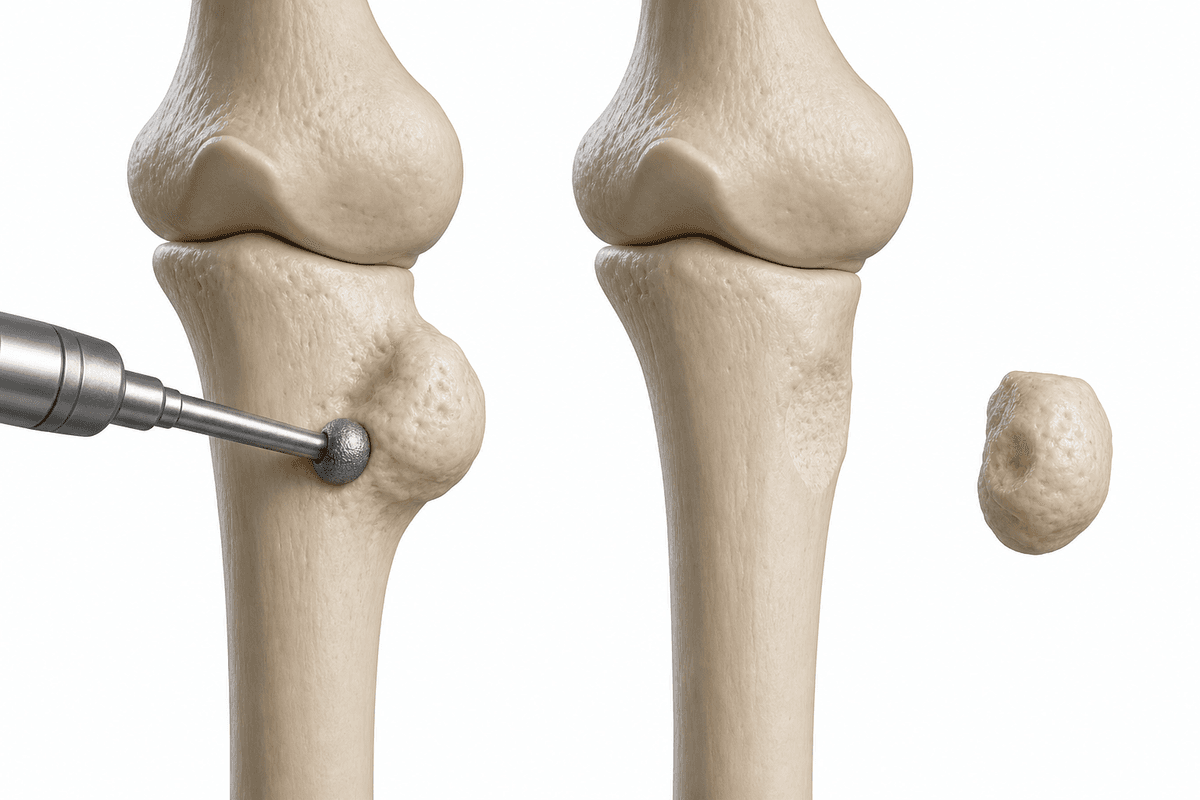
Exostosis excision is a surgical procedure to remove bony outgrowths called exostoses or osteochondromas. These benign bone growths can develop near growth plates during childhood and may cause discomfort, limit joint movement, or press on nerves or blood vessels. The procedure involves making an incision over the bony bump and carefully removing the extra bone tissue while protecting surrounding muscles, nerves, and blood vessels.
We believe in honest, upfront disclosure so you can make an informed decision.
A step-by-step look at what happens during this procedure.
General anaesthesia is administered so the child remains comfortably asleep and pain-free throughout the procedure.
An incision is made over the site of the exostosis, allowing the surgeon to access the bony growth.
Muscles and soft tissues are carefully moved aside to expose the bone growth while protecting nerves and blood vessels.
The exostosis is carefully cut away from the underlying bone using surgical instruments, ensuring complete removal of the growth.
The incision is closed with sutures, and a sterile dressing is applied over the surgical site.
A structured, patient-first approach from first consultation to full recovery.
Dr Venkatram Thyalapalli examines the child, reviews imaging studies, and discusses symptoms to determine if excision is needed and the best approach.
The exostosis is removed with precision to protect surrounding nerves, vessels, and growth plates, minimising the risk of complications.
Each child receives tailored instructions for wound care, activity modification, and physiotherapy based on the location and extent of surgery.
Regular check-ups are scheduled to monitor healing, watch for recurrence, and ensure the child returns to normal activities safely.
What to expect at each stage of your recovery journey.
The surgical site will be swollen and tender. Pain medication is given as needed. The limb may be protected with a splint or bandage, and weight-bearing or use of the limb is limited based on the location of surgery.
Swelling begins to settle. Gentle range-of-motion exercises may be started to prevent stiffness. Activity gradually increases under guidance, but contact sports and heavy lifting remain restricted.
Strength and movement continue to improve. Physiotherapy may be recommended to restore full function. Most children return to school and normal daily activities, with clearance needed before resuming sports.
Excision typically relieves pain and pressure caused by the bony growth, and may improve joint movement if the exostosis was limiting range of motion.
Visible bony bumps are removed, which can improve the appearance of the limb and reduce self-consciousness in children.
In some cases, especially if growth plates are still active, the exostosis may grow back after excision. Ongoing monitoring is important.
If the exostosis is part of a hereditary condition like multiple hereditary exostoses, the procedure removes individual growths but does not prevent new ones from forming elsewhere.
The right choice depends on your diagnosis, risks and circumstances — discussed with you at your consultation.
Small, painless exostoses that do not interfere with function may simply be watched over time with periodic check-ups and imaging, especially if the child is still growing.
If symptoms are mild, activity modification, protective padding, and exercises to maintain joint mobility may be tried before considering surgery.
In some cases, waiting until growth plates close may reduce the risk of recurrence, though this depends on the severity of symptoms and risks of delaying treatment.
Let's clear up some of the most common myths about exostosis excision.
Get a personalised assessment from an experienced specialist. Understand your options, ask your questions, and decide with confidence.
Consult Venkat Ram Thyalapalli for Exostosis Excision at any of these 2 centres — pick the one nearest you.