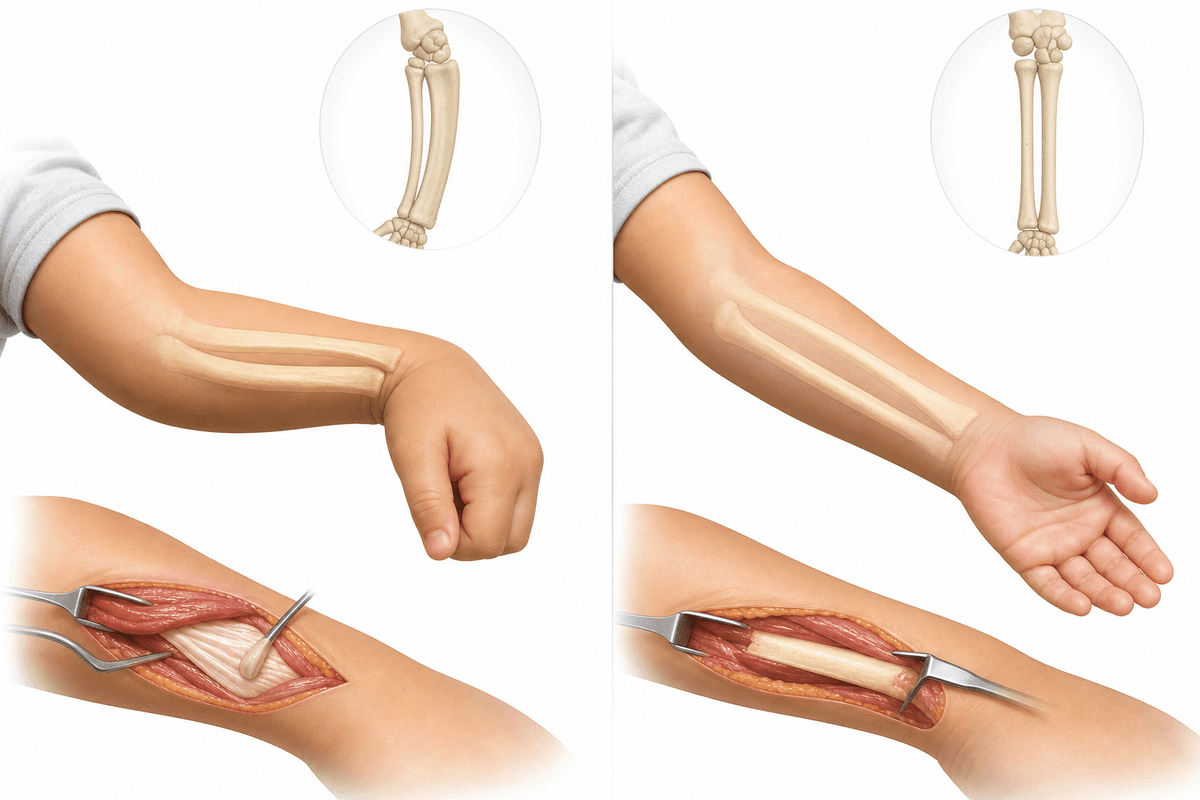
Performed by Dr. Venkat Ram Thyalapalli at Dr Venkatram Thyalapalli
Radial Clubhand Correction in Hyderabad is a specialized pediatric orthopedic procedure designed to address congenital radial deficiency, where the radius bone is underdeveloped or absent, causing the hand to bend toward the thumb side. This condition requires early intervention to improve hand function, alignment, and appearance. Dr Venkatram Thyalapalli provides comprehensive treatment using advanced surgical techniques tailored to each child's unique needs.
We believe in honest, upfront disclosure so you can make an informed decision.
A step-by-step look at what happens during this procedure.
Comprehensive evaluation including physical examination, X-rays, and assessment of associated anomalies to determine the severity of radial deficiency and plan the appropriate surgical approach.
Release of tight structures on the radial side of the wrist and forearm to allow the hand to be straightened and positioned properly over the ulna bone.
The carpus (wrist bones) is positioned over the distal ulna to create a stable and functional alignment, with centralization placing the ulna in the center of the carpus or radialization positioning it slightly to the radial side.
Rebalancing of muscles and tendons around the wrist to maintain correction and improve hand function, often transferring stronger muscles to support the radial side.
Temporary fixation with pins or wires to maintain alignment during healing, followed by careful wound closure and application of a protective cast extending from hand to upper arm.
A structured, patient-first approach from first consultation to full recovery.
Dr Venkatram Thyalapalli conducts thorough evaluation of each child's unique anatomy, assessing bone development, soft tissue constraints, and functional limitations to create an individualized surgical plan that addresses the specific grade of radial deficiency.
Using microsurgical precision and child-friendly approaches, Dr Thyalapalli performs meticulous soft tissue releases, bone realignment, and tendon balancing procedures to achieve optimal correction while preserving growth potential and maximizing hand function.
Following surgery, Dr Thyalapalli provides structured rehabilitation protocols including serial casting, splinting, and occupational therapy coordination to maintain correction and promote functional recovery throughout the child's growth.
Dr Thyalapalli monitors each patient through growth phases, adjusting treatment as needed and addressing any recurrence early, ensuring sustained functional outcomes and optimal hand development into adolescence.
What to expect at each stage of your recovery journey.
The first 6-8 weeks involve immobilization in a long-arm cast to protect the surgical correction and allow soft tissues and bones to heal. Pain management is provided, and parents receive instructions on cast care and activity restrictions.
From 2-6 months, the child transitions to removable splints worn day and night, with gradual introduction of occupational therapy to improve range of motion, strengthen muscles, and develop functional hand skills appropriate for age.
Beyond 6 months, night splinting continues to prevent recurrence while the child progressively increases hand use in daily activities. Regular follow-ups monitor growth, alignment, and function with adjustments to therapy protocols as needed throughout childhood.
Surgical correction successfully straightens the hand and positions it over the forearm, creating a more functional and cosmetically improved appearance that enhances the child's ability to grasp objects and perform daily activities.
Children gain improved ability to use their hand for bimanual activities, self-care tasks, and age-appropriate play, with tendon transfers and muscle rebalancing providing better control and strength for pinching and gripping.
Early surgical intervention prevents worsening of the radial deviation and associated wrist instability that would otherwise occur with growth, maintaining alignment throughout childhood and adolescence.
Improved hand appearance and function contribute to better self-esteem, social integration, and participation in activities with peers, supporting overall quality of life and developmental milestones.
Let's clear up some of the most common myths about radial clubhand correction.
Get a personalised assessment from an experienced specialist. Understand your options, ask your questions, and decide with confidence.
Consult Venkat Ram Thyalapalli for Radial Clubhand Correction at any of these 2 centres — pick the one nearest you.