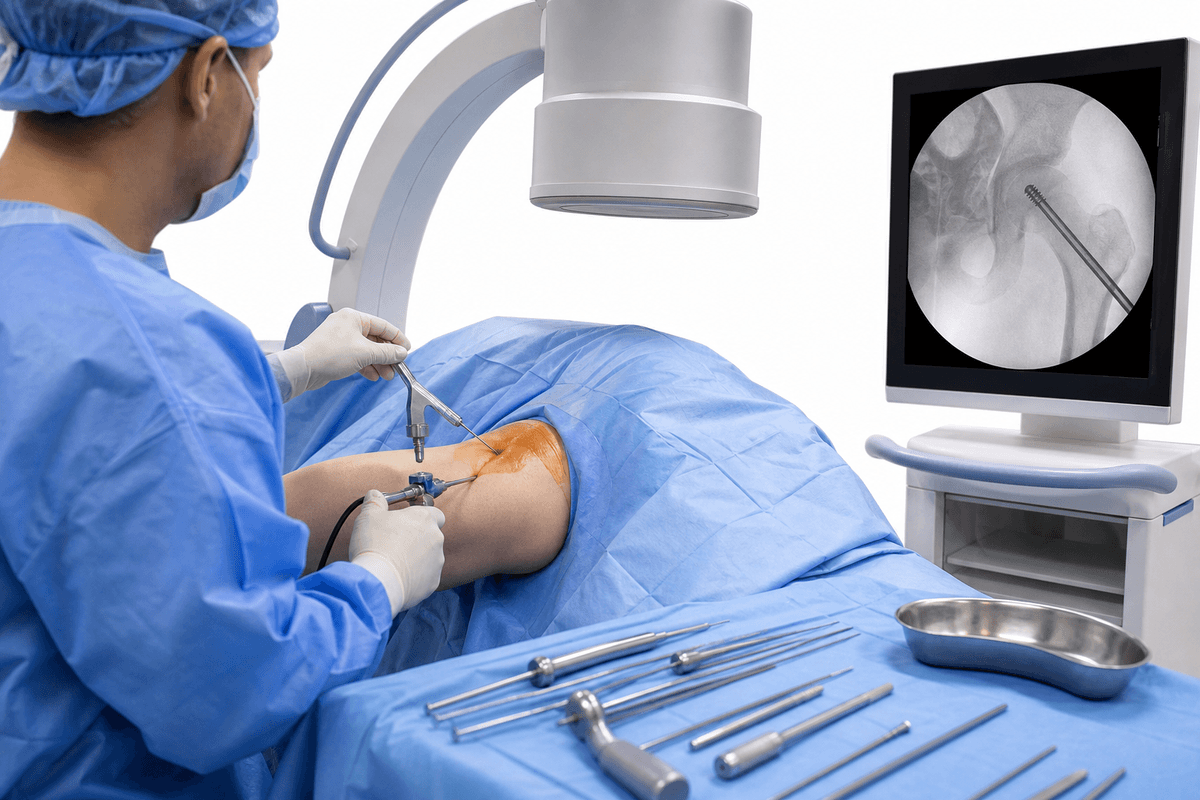
Performed by Dr. Venkat Ram Thyalapalli at Dr Venkatram Thyalapalli
SCFE Fixation in Hyderabad is a specialized surgical procedure to stabilize a slipped capital femoral epiphysis, where the femoral head slips off the neck of the femur at the growth plate. This condition most commonly affects adolescents during growth spurts and requires prompt surgical intervention to prevent further slipping and preserve hip function. Dr Venkatram Thyalapalli provides expert pediatric orthopedic care with extensive experience in SCFE management.
We believe in honest, upfront disclosure so you can make an informed decision.
A step-by-step look at what happens during this procedure.
The patient is placed under general anesthesia and positioned on a specialized fracture table to allow precise imaging and manipulation of the hip joint during the procedure.
C-arm fluoroscopy is used to obtain clear images of the hip joint in multiple views, allowing accurate visualization of the slipped femoral head and planning of screw placement trajectory.
Through a small skin incision, a guide wire is inserted through the femoral neck into the center of the femoral head under continuous fluoroscopic guidance to ensure optimal positioning.
A cannulated screw is placed over the guide wire and advanced to stabilize the slipped epiphysis, securing the femoral head to the neck and preventing further displacement.
Final fluoroscopic images confirm proper screw placement without joint penetration. The small incision is closed with sutures and a sterile dressing is applied.
A structured, patient-first approach from first consultation to full recovery.
Dr Venkatram Thyalapalli conducts thorough clinical examination and reviews detailed imaging to classify the slip severity and plan the optimal fixation strategy tailored to each child's anatomy.
Using state-of-the-art fluoroscopy equipment and minimally invasive approaches, Dr Thyalapalli ensures precise screw placement with minimal soft tissue disruption for faster recovery.
Post-operatively, Dr Thyalapalli designs customized physical therapy programs based on slip severity and stability, ensuring appropriate weight-bearing progression and range of motion exercises.
Regular follow-up visits with serial X-rays are scheduled to monitor healing, detect any complications early, and assess for contralateral hip involvement requiring prophylactic fixation.
What to expect at each stage of your recovery journey.
The first 2-3 days involve hospital monitoring, pain management, and gentle leg exercises. Patients begin mobilizing with crutches under physiotherapy guidance while maintaining protected weight bearing on the affected hip.
Weeks 2-6 focus on gradual increase in activity with continued non-weight bearing or toe-touch weight bearing initially. Physical therapy emphasizes hip range of motion exercises and strengthening of surrounding muscles while monitoring for complications.
Weeks 6-12 allow progressive weight bearing as healing is confirmed on X-rays. Patients transition from crutches to full independent walking, with graduated return to normal activities and sports under medical supervision.
The primary outcome is successful stabilization of the slipped epiphysis, preventing further displacement and allowing the growth plate to fuse in a secure position, preserving hip joint anatomy.
Most patients achieve excellent hip function with minimal or no long-term limitations. Early intervention with proper fixation significantly reduces the risk of severe arthritis and the need for hip replacement in young adulthood.
Children typically return to normal daily activities within 3 months and can resume sports by 4-6 months post-surgery, though high-impact activities may require longer restriction based on individual healing.
With successful fixation and appropriate rehabilitation, patients maintain good hip joint health throughout adolescence and adulthood, though regular monitoring is essential to detect and manage any late complications.
Let's clear up some of the most common myths about scfe fixation.
Get a personalised assessment from an experienced specialist. Understand your options, ask your questions, and decide with confidence.
Consult Venkat Ram Thyalapalli for SCFE Fixation at any of these 2 centres — pick the one nearest you.